
5 Warning Signs of Periodontal Disease You Shouldn't Ignore

Adult Dentistry
Periodontal Treatment
General Oral Care
Periodontal disease — commonly known as gum disease — is a chronic condition that affects the gums and the bone supporting your teeth. It is one of the most common causes of tooth loss in adults. What makes it particularly concerning is that in its early stages, periodontal disease is often painless, meaning many people do not realise they have a problem until it has progressed significantly.
Periodontal disease is common among adults. When warning signs are recognised early, the condition can be effectively managed through appropriate dental care.
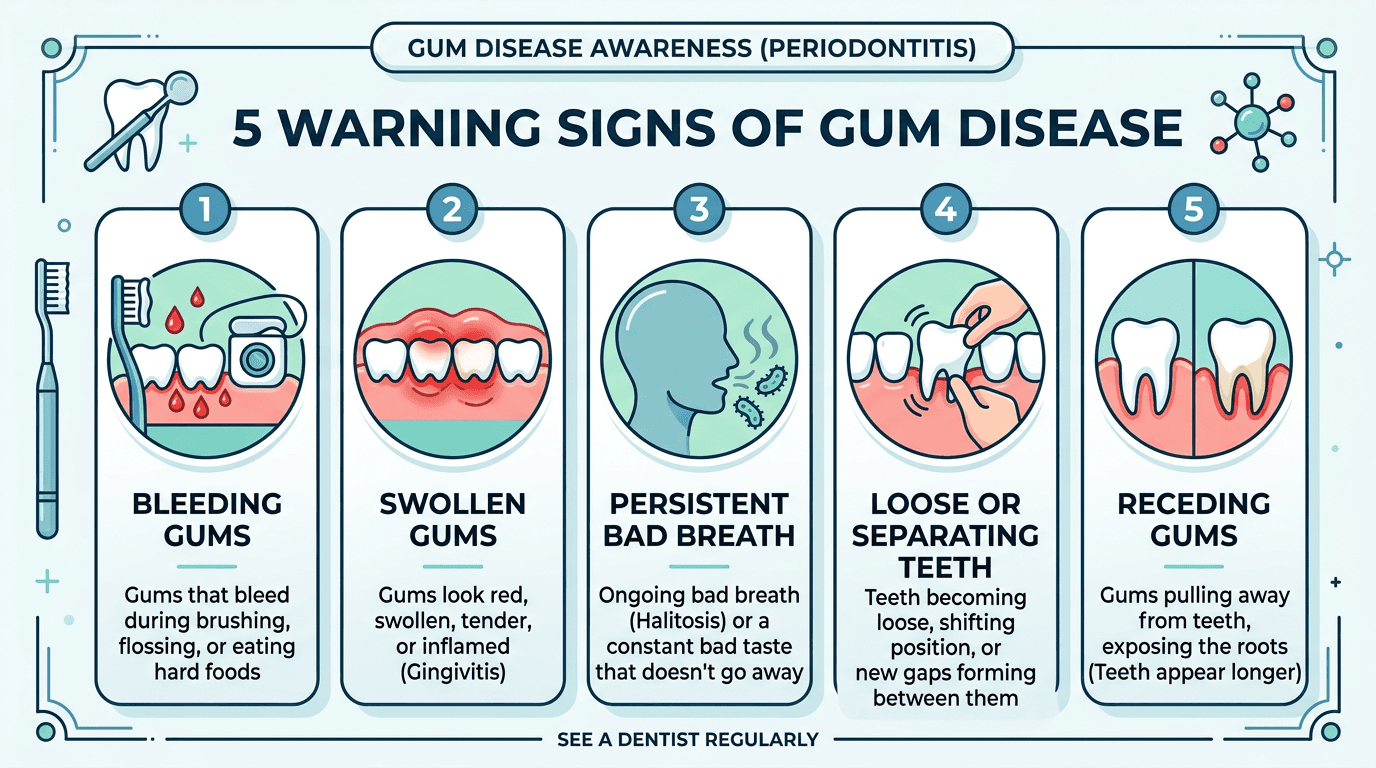
Here are five warning signs that everyone should watch for.
Warning Sign 1: Bleeding Gums When Brushing or Flossing
This is the most common — and most commonly ignored — early sign of periodontal disease.
Many people assume that bleeding during brushing is "normal" or caused by brushing too hard. But healthy gums should not bleed. Bleeding gums usually indicate that the gums are already inflamed (gingivitis), the earliest stage of periodontal disease.
Watch for:
Blood on your toothbrush after brushing
Blood on dental floss after flossing
Bleeding when biting into hard foods (such as an apple)
Pink-tinged saliva when you rinse
If bleeding persists for more than one to two weeks, even without pain, we recommend scheduling a dental check-up.
Warning Sign 2: Red, Swollen, or Tender Gums
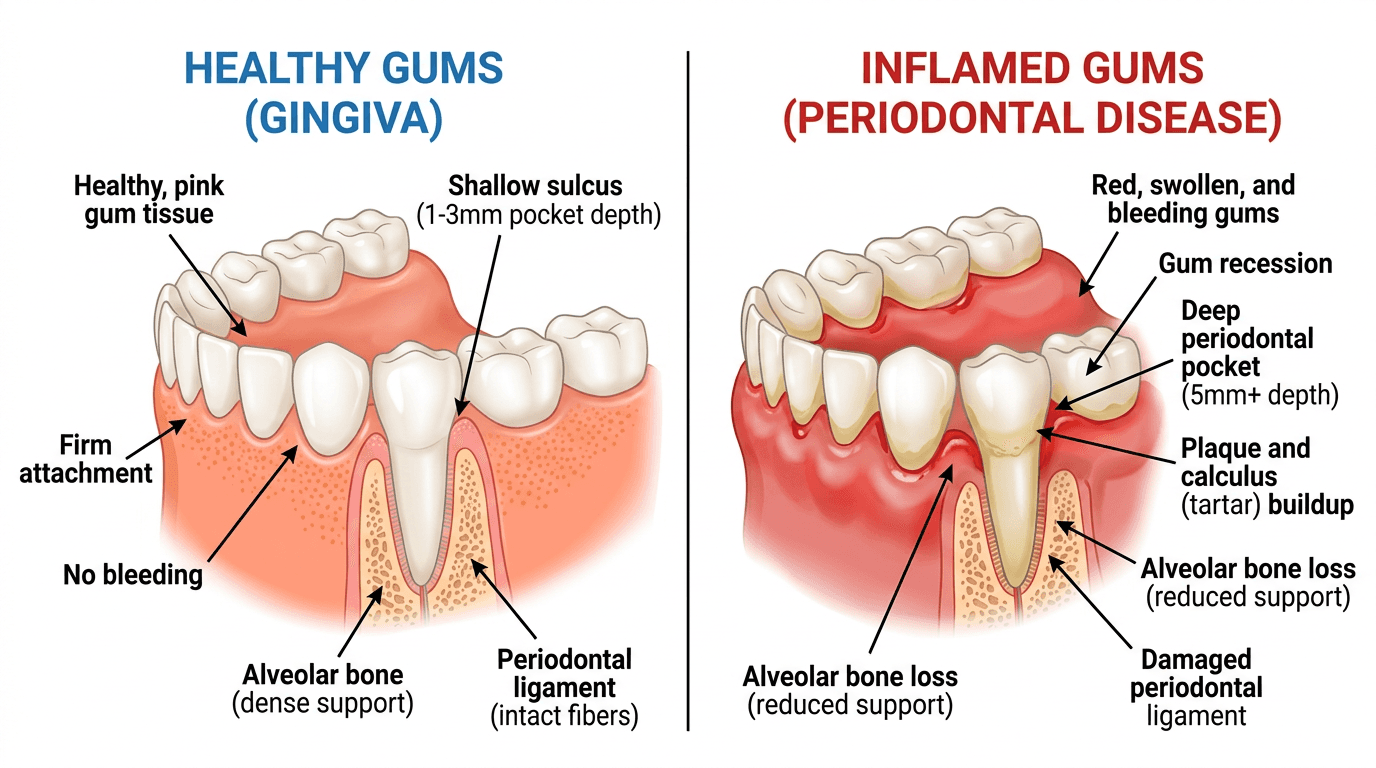
Healthy gums are pink, firm, and fit snugly against the teeth. When periodontal disease begins to develop, the gums may show the following changes:
Colour changes from pink to dark red
Gum margins appear swollen and look puffy
Pain or sensitivity when touched
These changes indicate that bacteria in dental plaque are triggering an inflammatory response. If left untreated, the inflammation will gradually extend deeper, affecting the bone that supports the teeth.
Warning Sign 3: Persistent Bad Breath
Occasional bad breath may be related to diet, but persistent bad breath (halitosis) can be a sign of periodontal disease.
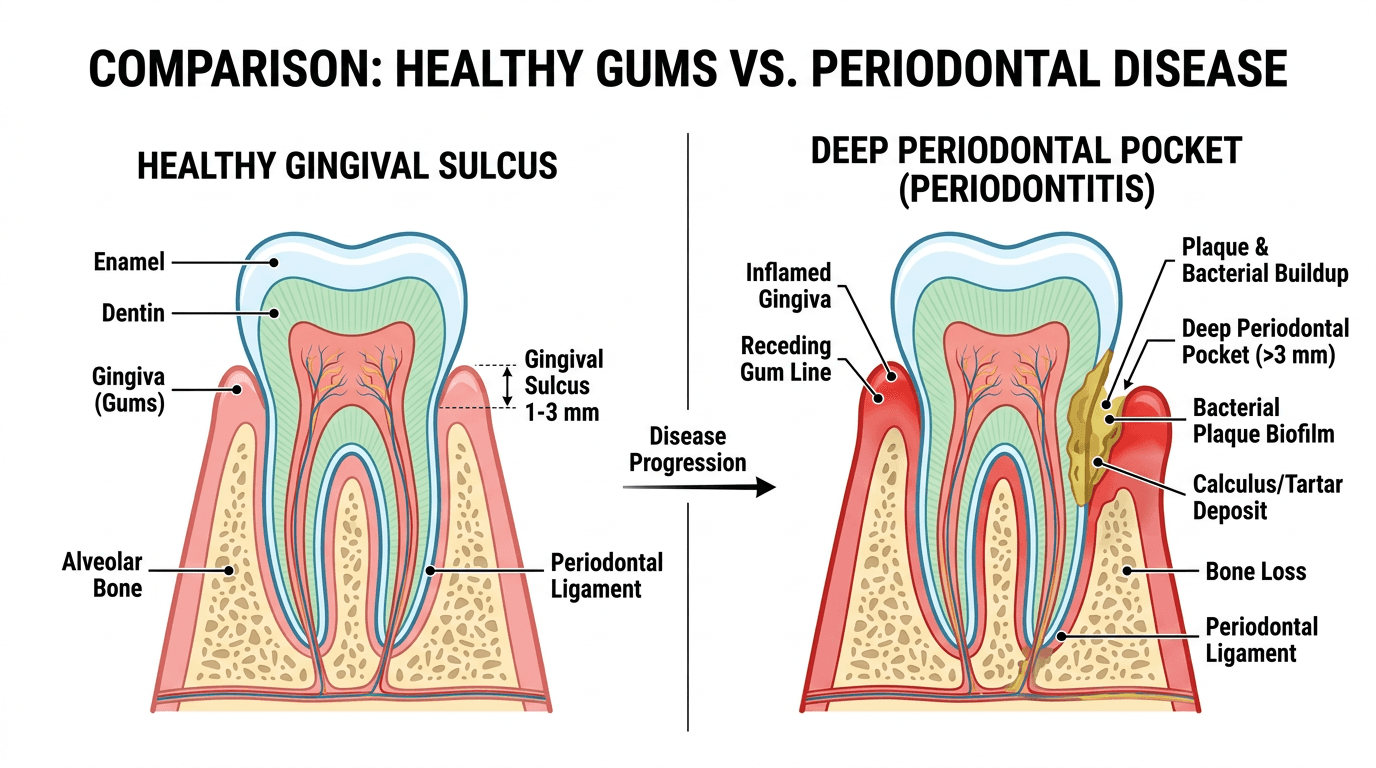
Periodontal disease creates deep "pockets" between the gums and teeth. These pockets become breeding grounds for bacteria. Daily brushing and flossing cannot reach these deep areas. The bacteria continuously break down food debris and produce sulphur compounds, resulting in bad breath that is difficult to eliminate.
If you notice:
Bad breath that persists after brushing
A frequent unpleasant taste in your mouth
Others mentioning that you have bad breath
A periodontal assessment is recommended to rule out or confirm gum disease.
Warning Sign 4: Loose or Shifting Teeth
As periodontal disease advances to moderate or severe stages, the alveolar bone that supports the teeth is gradually eroded. When enough bone is lost, teeth begin to loosen or shift.
You may notice:
Your bite feels different from before
New gaps appearing between your front teeth
Teeth that seem to protrude forward or shift position
A feeling of movement when biting into hard foods
Loose teeth are a sign that periodontal disease has caused significant bone loss. At this stage, prompt periodontal treatment is critical to prevent further deterioration and to save the affected teeth.
Warning Sign 5: Receding Gums (Teeth Appear "Longer")
If you feel that your teeth look "longer" than they used to, it is not that your teeth are growing — your gums are receding, exposing more of the tooth root surface.
Consequences of gum recession include:
Root sensitivity: Exposed roots lack the protective enamel layer, making them particularly sensitive to cold, hot, sweet, and acidic stimuli
Increased cavity risk: Root surfaces are more susceptible to decay than the tooth crown
Aesthetic impact: Uneven gum lines can affect the appearance of your smile
Gum recession may result from periodontal disease or other factors (such as over-aggressive brushing). Regardless of the cause, it is worth consulting your dentist for an assessment.
What Happens If Periodontal Disease Is Left Untreated?
Periodontal disease does not resolve on its own. Without treatment, it can lead to:
Teeth gradually loosening and eventually falling out
The need for more complex and costly treatments (such as surgery or implants)
Impacts on overall health — research has shown links between periodontal disease and cardiovascular disease, diabetes, and pregnancy complications
Early intervention generally allows for simpler treatment options. Your dentist can advise on the most appropriate approach based on your individual situation.
How Is Periodontal Disease Treated?
Periodontal treatment varies depending on severity:
Early stage (gingivitis): Professional cleaning to remove tartar and plaque, combined with improved daily oral care, can usually reverse the condition completely
Moderate periodontal disease: Deep cleaning (root planing and scaling) to remove tartar and bacteria from periodontal pockets. Multiple sessions may be required
Severe periodontal disease: Surgical intervention may be necessary, including flap surgery or bone regeneration procedures
All stages of treatment are supported by regular follow-up visits and maintenance to prevent recurrence.
How to Prevent Periodontal Disease
Periodontal disease is largely preventable. The following habits can significantly reduce your risk:
Brush twice daily for at least two minutes using a soft-bristled toothbrush
Floss daily to clean between teeth
Schedule regular dental check-ups and cleanings (recommended every six months)
Quit smoking — smoking is one of the primary risk factors for periodontal disease
Manage diabetes and other chronic conditions effectively
Frequently Asked Questions
Does bleeding gums always mean periodontal disease?
Not necessarily, but it is one of the most common causes. Other reasons include improper brushing technique, hormonal changes (such as during pregnancy), and certain medication side effects. A dental check-up is recommended to determine the cause.
Can periodontal disease be completely cured?
Early-stage gingivitis can be fully reversed. Once it has progressed to periodontitis, the lost bone cannot be fully restored, but the condition can be effectively managed through treatment to prevent further deterioration and maintain long-term stability.
Can regular cleaning treat periodontal disease?
Regular professional cleaning is effective for preventing and managing early gingivitis. However, if the condition has progressed to periodontitis, deeper treatment (such as root planing and scaling) is typically required — routine cleaning alone is not sufficient.
Is periodontal disease contagious?
Periodontal disease itself is not directly contagious, but the bacteria that cause it can be transmitted through saliva (for example, sharing utensils or kissing). If a family member has periodontal issues, the whole family should pay attention to oral hygiene.
How often should I have a periodontal check-up?
Most adults should have a dental check-up every six months, which includes a periodontal assessment. If you have been diagnosed with periodontal disease, you may need follow-up visits every 3–4 months for maintenance treatment.
Periodontal disease is a "silent disease" — it may be quietly damaging your oral health before you even notice. Recognising the warning signs, maintaining good oral care habits, and scheduling regular professional check-ups are the best strategies for protecting your teeth and gums.
If you have noticed any of the warning signs described above, you are welcome to contact our clinic for a consultation to determine whether further assessment or treatment is needed.


Book an Appointment
Schedule your visit now for personalized care in a comfortable environment. Your journey to a brighter, healthier smile begins here.