Children's Orthodontics: What's the Best Age to Start? A Complete Guide to Early Treatment
Children's Dentistry
Family Dentistry
Orthodontics
Children's Orthodontics: What's the Best Age to Start? A Complete Guide to Early Treatment
"When can my child start wearing braces?" "Is orthodontic treatment really necessary before all the baby teeth have fallen out?" These are questions that parents frequently encounter as their children grow. With advances in modern orthodontic technology, experts increasingly recommend early intervention at the right time — not only to improve bite function and facial development, but also to reduce the likelihood of more extensive treatment later.
This article provides a comprehensive guide for parents on the golden window for children's orthodontics, the principles and benefits of early treatment, a comparison of different treatment options, and how to make the best choice for your child.
Why Do Children Need Orthodontic Treatment?
Children's orthodontic treatment is about far more than aesthetics. Misaligned teeth and bite problems, if left untreated, can have lasting effects on a child's oral health and overall development:
Impaired chewing function: A misaligned bite affects how thoroughly food is chewed, which can impact digestion and nutrient absorption.
Speech issues: Abnormal tooth positioning can cause difficulties with certain sounds.
Increased risk of decay and gum disease: Crowded or crooked teeth are harder to clean and more prone to plaque build-up.
Abnormal jaw development: Missing the optimal treatment window can lead to disproportionate jaw growth — severe cases may eventually require surgical correction.
Impact on self-confidence: Visible dental issues can make children self-conscious in social situations.
Warning Signs to Watch For
If you notice any of the following in your child, an early orthodontic assessment is recommended:
Noticeably protruding front teeth (overjet/"buck teeth") or a forward lower jaw (underbite)
Visibly crowded or crooked teeth
Front teeth that cannot close together (open bite)
One-sided chewing habits
Prolonged thumb-sucking, lip-biting, or mouth breathing
Baby teeth lost too early or retained too long
When Is the Golden Age for Orthodontic Treatment?
The ideal timing for children's orthodontics varies by individual, but international guidelines provide a clear framework:
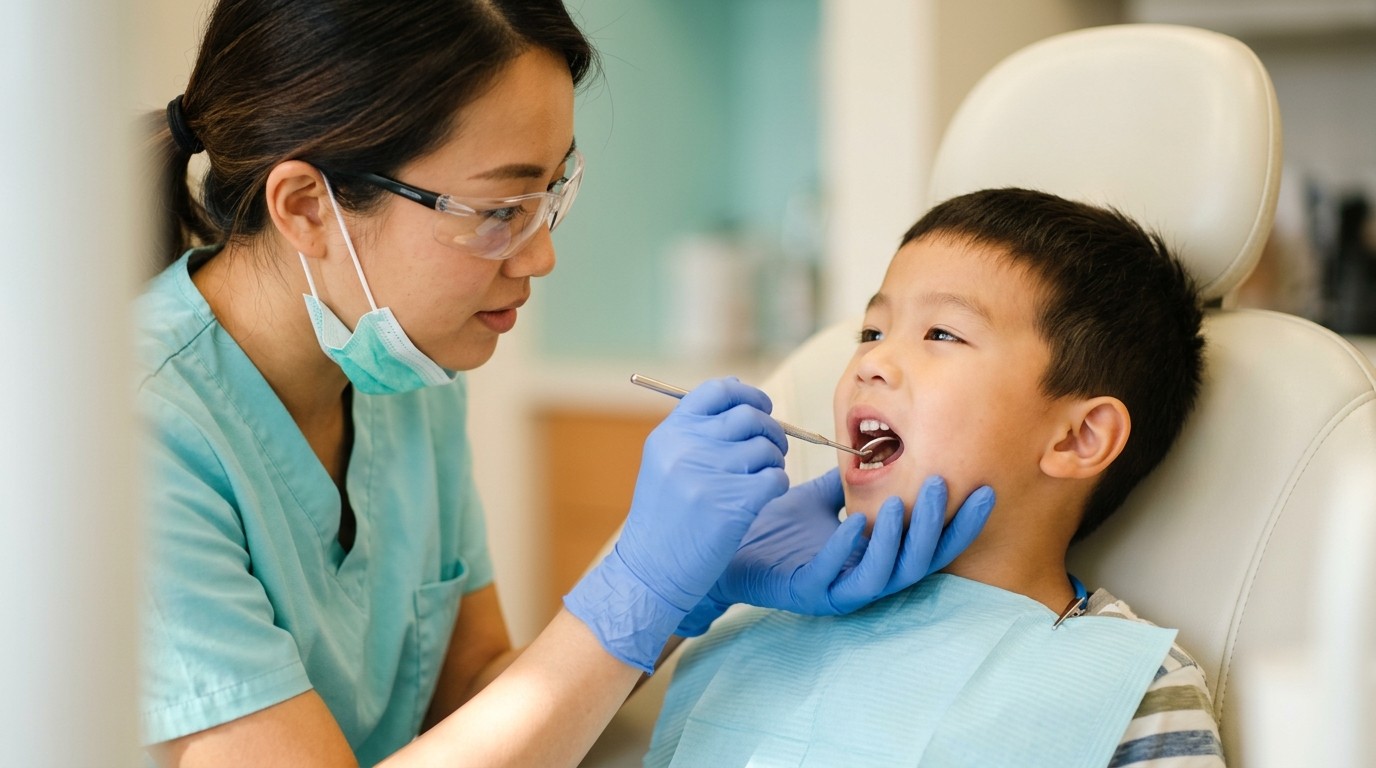
Age 7: First Orthodontic Screening
The American Association of Orthodontists (AAO) recommends that all children receive their first orthodontic evaluation by age 7. By this age, enough permanent teeth have erupted for an orthodontist to identify potential issues that may benefit from early intervention.
An evaluation at age 7 does not mean braces at age 7! Most children will simply be monitored at regular intervals until the optimal time for treatment. Only a small number of cases require immediate early intervention.
Ages 6–10: Early Treatment (Phase 1)
Early orthodontic treatment, also known as Phase 1 or interceptive orthodontics, is carried out during the mixed dentition phase (when baby and permanent teeth coexist). It targets specific problems that benefit from early correction:
Underbite (Class III): A protruding lower jaw should be addressed early to prevent worsening skeletal imbalance
Posterior crossbite: Can cause asymmetric jaw development if left untreated
Severe crowding: Space needs to be created for incoming permanent teeth
Anterior open bite: Often linked to oral habits such as thumb-sucking
Impacted or blocked permanent teeth: Retained baby teeth or extra teeth obstructing normal eruption
Ages 11–15: Comprehensive Treatment (Phase 2)
This is the stage most people associate with "getting braces." Once all or most permanent teeth have erupted, comprehensive alignment and bite correction can be performed. This phase is typically the most thorough stage of treatment.
Stage | Age | Focus |
|---|---|---|
First Screening | By age 7 | Identify potential issues; create an observation or treatment plan |
Early Treatment (Phase 1) | Ages 6–10 | Address jaw development issues; guide permanent tooth eruption |
Comprehensive Treatment (Phase 2) | Ages 11–15 | Full alignment and bite correction; most permanent teeth erupted |
Benefits of Early Treatment & Common Appliances
The core principle of early orthodontics is to harness the plasticity of a growing child's skeleton to guide development and intervene before problems worsen.
Key Benefits of Early Treatment
Guide healthy jaw growth: Leverage growth potential to adjust the proportion and position of the upper and lower jaws
Create space for permanent teeth: Arch expansion or space maintenance can reduce the need for extraction-based orthodontics later
Simplify future treatment: By addressing root causes early, Phase 2 treatment duration and complexity can be significantly reduced
Reduce injury risk: Protruding front teeth are more vulnerable during sports or falls — early correction lowers this risk
Address harmful habits: Some appliances can help children break habits such as thumb-sucking or mouth breathing
Common Early Orthodontic Appliances
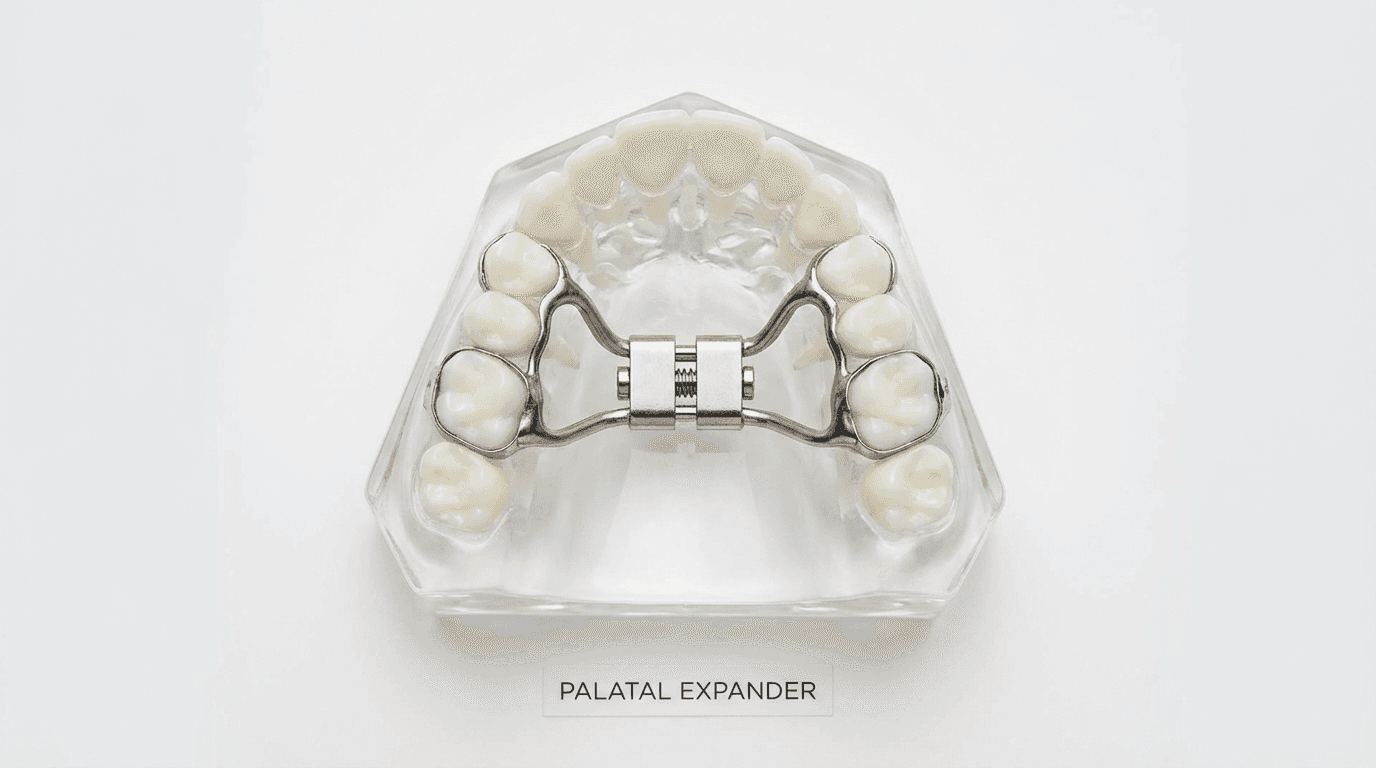
Palatal Expander: Gradually widens the upper jaw, creating space for crowded teeth and potentially improving nasal airflow
Space Maintainer: Holds open the space left by a prematurely lost baby tooth, preventing neighbouring teeth from drifting
Functional Appliances (e.g. Twin Block, Myobrace): Use muscle forces to guide jaw growth forward or restrain excessive growth
Partial Fixed Braces: Brackets placed on select teeth to target specific movements
Headgear: Less commonly used today; primarily for severe upper jaw protrusion
Comparing Common Orthodontic Options
When a child is ready for comprehensive orthodontic treatment (or needs fixed appliances during early treatment), parents typically choose between the following options:
Treatment Type | Advantages | Disadvantages | Best For | Approx. Duration |
|---|---|---|---|---|
Traditional Metal Braces | Highly effective; widest range of applications; relatively lower cost | Visually obvious; initial discomfort | Most orthodontic cases | 18–36 months |
Ceramic Braces | Tooth-coloured; more discreet | Higher cost; may stain over time | Appearance-conscious teens | 18–36 months |
Clear Aligners (e.g. Invisalign) | Nearly invisible; removable; easy to clean | Requires strong compliance; higher cost; not suitable for all cases | Mild to moderate issues; compliant teens | 12–24 months |
Functional Appliances | Harnesses growth potential; can improve facial profile | Only effective during growth period; must be worn consistently | Early treatment; jaw discrepancies | 6–18 months |
Every child is different. The most suitable treatment depends on the specific bite problem, the child's age, their level of cooperation, and the family's budget. A comprehensive evaluation by a qualified orthodontist is essential before making a decision.
Caring for Teeth During Orthodontic Treatment
Regardless of the type of braces, good oral hygiene during treatment is critical to a successful outcome:
Step up oral hygiene: Fixed braces make teeth more prone to food accumulation. Brush after every meal and use an orthodontic toothbrush and interdental brushes.
Mind your diet: Avoid hard, sticky, or crunchy foods (such as hard sweets, popcorn, and chewing gum) to prevent damage to the appliance.
Keep regular appointments: Timely follow-ups allow the orthodontist to make adjustments and keep treatment on track.
Wear your retainer: After braces are removed, wearing a retainer as directed is essential to prevent teeth from shifting back — this step must not be skipped.

Frequently Asked Questions
What age can my child start braces?
The American Association of Orthodontists recommends a first orthodontic evaluation by age 7. If early intervention is needed (e.g. for an underbite or severe crowding), Phase 1 treatment may begin between ages 6 and 10. Comprehensive braces are typically started between ages 11 and 15, once most permanent teeth have erupted.
Can braces be fitted before all the baby teeth have fallen out?
Yes. Phase 1 (early) orthodontics is specifically designed for the mixed dentition stage, when baby and permanent teeth coexist. The goal is to leverage the child's growth potential to address issues affecting jaw development and permanent tooth eruption. Not every child needs Phase 1 — the orthodontist will assess each case individually.
After Phase 1, will my child still need Phase 2 treatment?
In many cases, yes. Phase 2 treatment (comprehensive braces) is often needed once all permanent teeth have erupted to complete full alignment and bite adjustment. However, because Phase 1 addresses root causes, Phase 2 treatment is usually shorter and less complex.
Are clear aligners (e.g. Invisalign) effective for children?
Clear aligner systems now offer options specifically designed for children and teenagers. For mild to moderate orthodontic issues, clear aligners can be very effective. Success depends heavily on compliance — aligners must be worn 20–22 hours per day and changed on schedule. Severe or complex cases may still require traditional fixed braces.
Does getting braces hurt? Can my child handle it?
Mild soreness or pressure is common for a few days after each adjustment, but it is generally manageable and subsides quickly. Modern orthodontic technology has significantly improved comfort levels. Parents can help by preparing softer foods during the initial adjustment period.
How much does orthodontic treatment cost?
Costs vary depending on the type of braces, the complexity of the case, and the duration of treatment. We recommend consulting an orthodontic clinic directly for a detailed fee schedule. Most clinics offer instalment payment plans to make treatment more accessible.
Children's orthodontic treatment is not just about achieving a straighter smile — it affects oral function, facial development, and long-term health. Seizing the golden window for treatment and seeking professional evaluation early can make all the difference.
If you would like to arrange an orthodontic assessment for your child, or have any questions about children's braces, please contact Dr. Teri Yung Dental Central to book a consultation.

Book an Appointment
Schedule your visit now for personalized care in a comfortable environment. Your journey to a brighter, healthier smile begins here.