Gum Recession & Black Triangles: A Complete Treatment Guide for Adults
Adult Dentistry
Cosmetic Dentistry
Periodontal Treatment
Gum Recession & Black Triangles: A Complete Treatment Guide for Adults
"My gaps between my teeth seem to be getting wider…" "My gums bleed when I brush…" "There are dark triangular spaces between my front teeth that weren't there before…"
If any of this sounds familiar, you may be experiencing black triangles caused by gum recession. This is an extremely common oral health concern for adults over 40, yet many people don't realise it can be treated until the problem becomes quite noticeable.
This article explains the causes of gum recession, how it leads to black triangles, the impact on oral health, and a detailed comparison of treatment options — including Bioclear and gum grafting — to help you make the most informed decision.
What Are Black Triangles & Why Do They Appear?
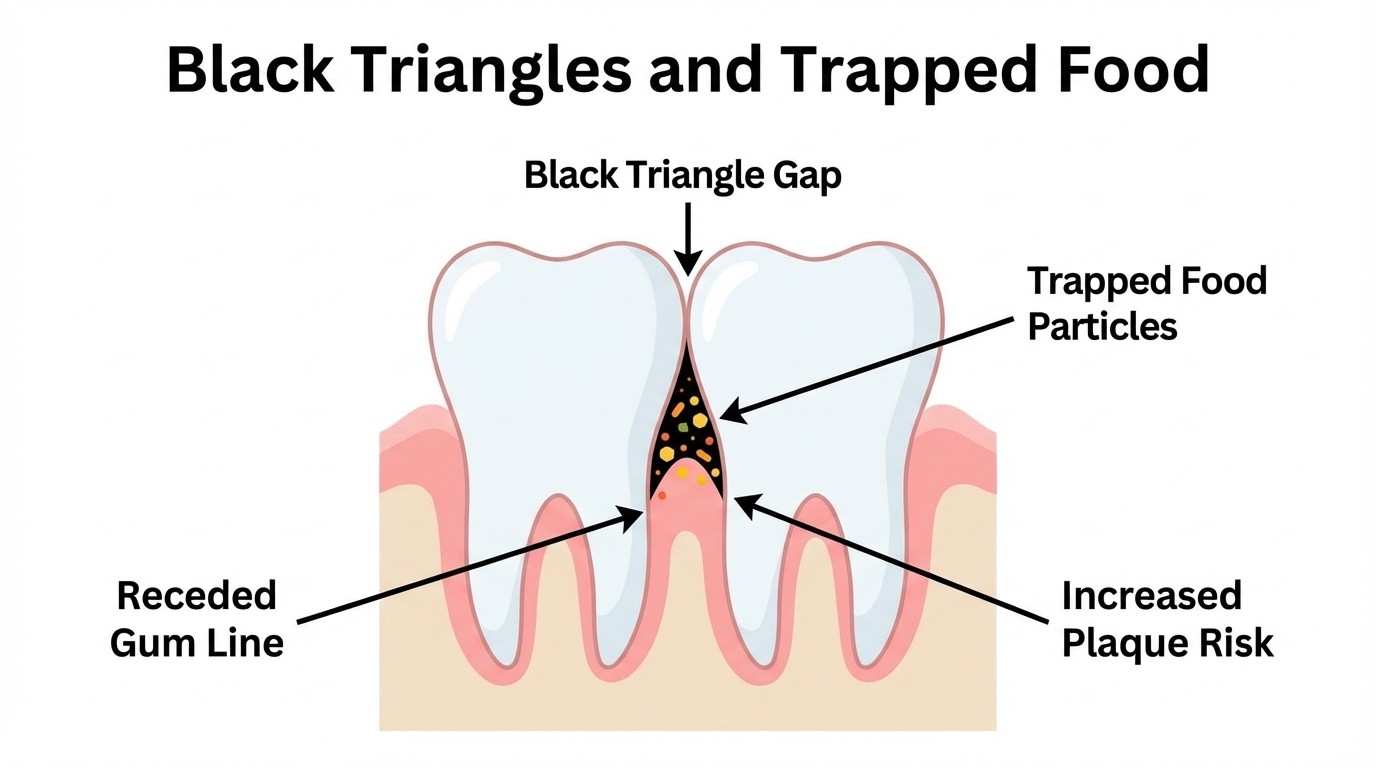
The space between teeth near the gum line is normally filled by a small wedge of pink tissue called the gingival papilla. When gum recession causes this tissue to shrink or disappear, the dark space beneath becomes visible — forming what's known as a black triangle (clinically called Open Gingival Embrasures).
Unlike post-orthodontic black triangles that appear suddenly after braces, gum recession-related black triangles are typically gradual, developing over months or years — making them easy to overlook until they become significant.
💡 Did you know? Research shows that over 50% of adults aged 50 and above have some degree of gum recession. Gum recession is one of the most common causes of black triangles, yet many people are unaware that effective treatments exist.
Understanding Gum Recession & Its Causes
Gum recession is one of the primary causes of black triangles. Here are the most common contributing factors:
Periodontal Disease (Periodontitis)
This is the most common and most serious cause. Periodontal disease destroys the bone and tissue supporting the teeth, leading to:
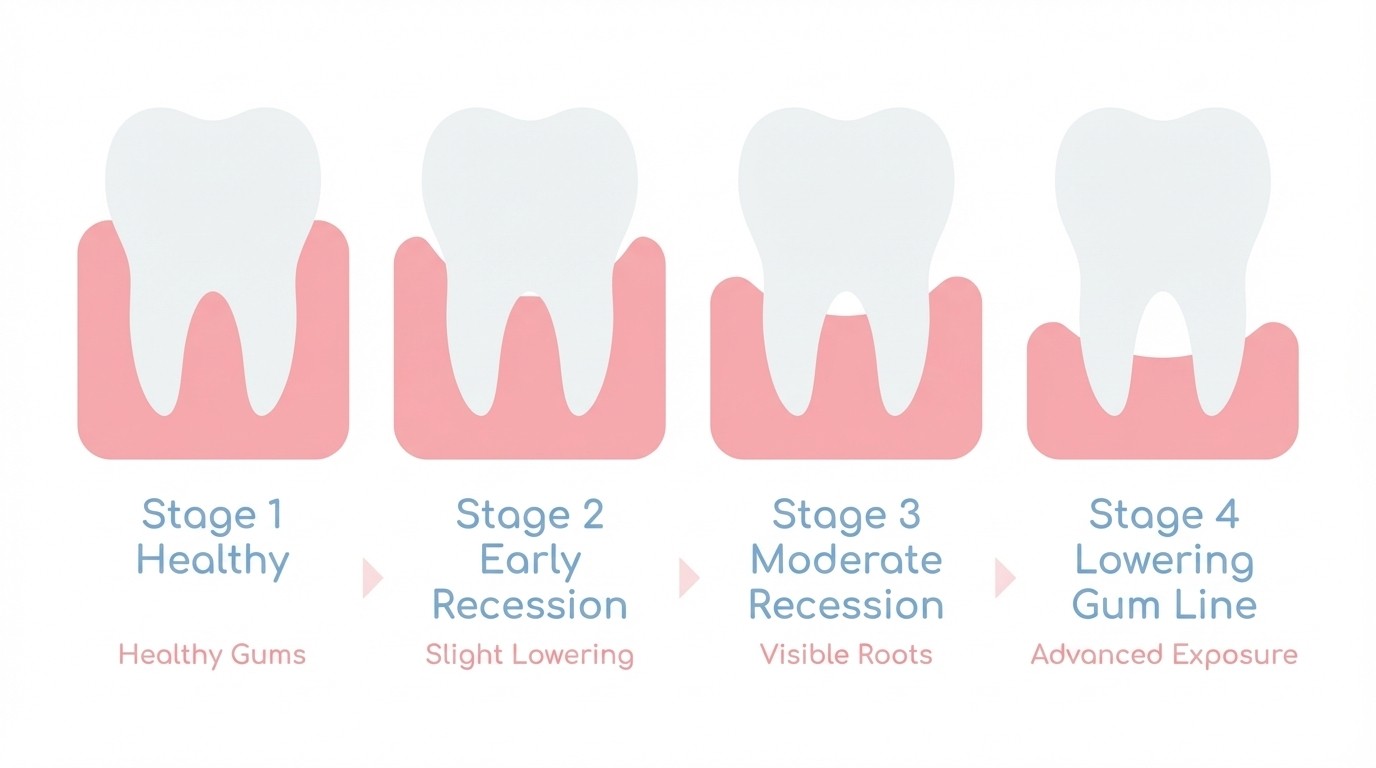
Gradual gum recession exposing the tooth roots
Bone loss that removes support for the gingival papilla
Increasingly visible dark gaps between teeth
Natural Ageing
With age, gum tissue naturally becomes thinner and recedes. Even without periodontal disease, noticeable recession can begin after age 40, with black triangles gradually appearing.
Improper Brushing Technique
Brushing too hard: Long-term aggressive brushing or using a hard-bristled toothbrush wears away gum tissue
Horizontal scrubbing: A back-and-forth sawing motion accelerates gum recession
Recommended: Use a soft-bristled brush with the Bass brushing technique
Other Factors
Smoking: Tobacco impairs gum blood circulation, accelerating recession
Bruxism (tooth grinding): Chronic grinding creates excessive bite forces that damage periodontal tissue
Thin gum biotype: People with naturally thinner gum tissue are more susceptible to recession
Poor restorations: Ill-fitting crowns or fillings can irritate the gums
How Black Triangles Affect Oral Health
Many people dismiss black triangles as "just cosmetic," but their impact on oral health is significant:
Food trapping: Food gets caught between teeth at every meal, requiring frequent use of floss or interdental brushes
Increased decay risk: Food accumulation plus cleaning difficulty significantly raises the risk of root cavities
Worsening periodontal disease: Bacteria thrive more easily in the gaps, accelerating tissue breakdown
Root sensitivity: Exposed roots lack protective enamel and are prone to hot/cold sensitivity
Aesthetic concerns: Black triangles in the front teeth area are especially noticeable and can affect smile confidence
⚠️ Important: Gum recession is irreversible — receded gums will not grow back on their own. If the underlying cause (such as periodontal disease) is not controlled, recession will continue to worsen and black triangles will grow larger. Early intervention is key.
The Critical First Step: Stabilising Periodontal Health
Before any black triangle repair can be performed, periodontal health must be stabilised. This is a non-negotiable prerequisite for successful treatment:
Periodontal disease control: If periodontitis is present, thorough periodontal treatment (deep scaling, root planing, etc.) must be completed first
Inflammation control: Gums must be free of redness, swelling, and bleeding before restorative work begins
Volume stability: Gum recession must have stopped progressing — otherwise treatment results may not last
💡 Good to know: Periodontal treatment typically requires 2–4 months to fully stabilise. Don't rush into cosmetic repair — building a solid periodontal foundation first ensures that restorative results remain stable long-term.
Treatment Options Compared
For black triangles caused by gum recession, the main treatment options include:
Option | How It Works | Advantages | Disadvantages |
|---|---|---|---|
Bioclear Composite | Clear matrices guide precise injection of composite resin to fill the gap and rebuild natural tooth contours | Minimally invasive; same-day; repairable; lower cost | May stain; requires periodic maintenance |
Gum Graft Surgery | Tissue harvested from another area of the mouth is transplanted to the recession site to increase gum thickness and coverage | Adds real gum tissue; protects roots; long-lasting results | Requires surgery; longer recovery (2–4 weeks); potential discomfort |
Porcelain Veneers / Crowns | Alters tooth shape to visually close the gap | Excellent aesthetics; durable | Requires tooth preparation; high cost; irreversible |
Hyaluronic Acid Filler | HA filler injected into the papilla to increase volume | Non-invasive; immediate effect | Temporary (6–12 months); requires repeat injections |
Bioclear vs Gum Graft Surgery: A Detailed Comparison
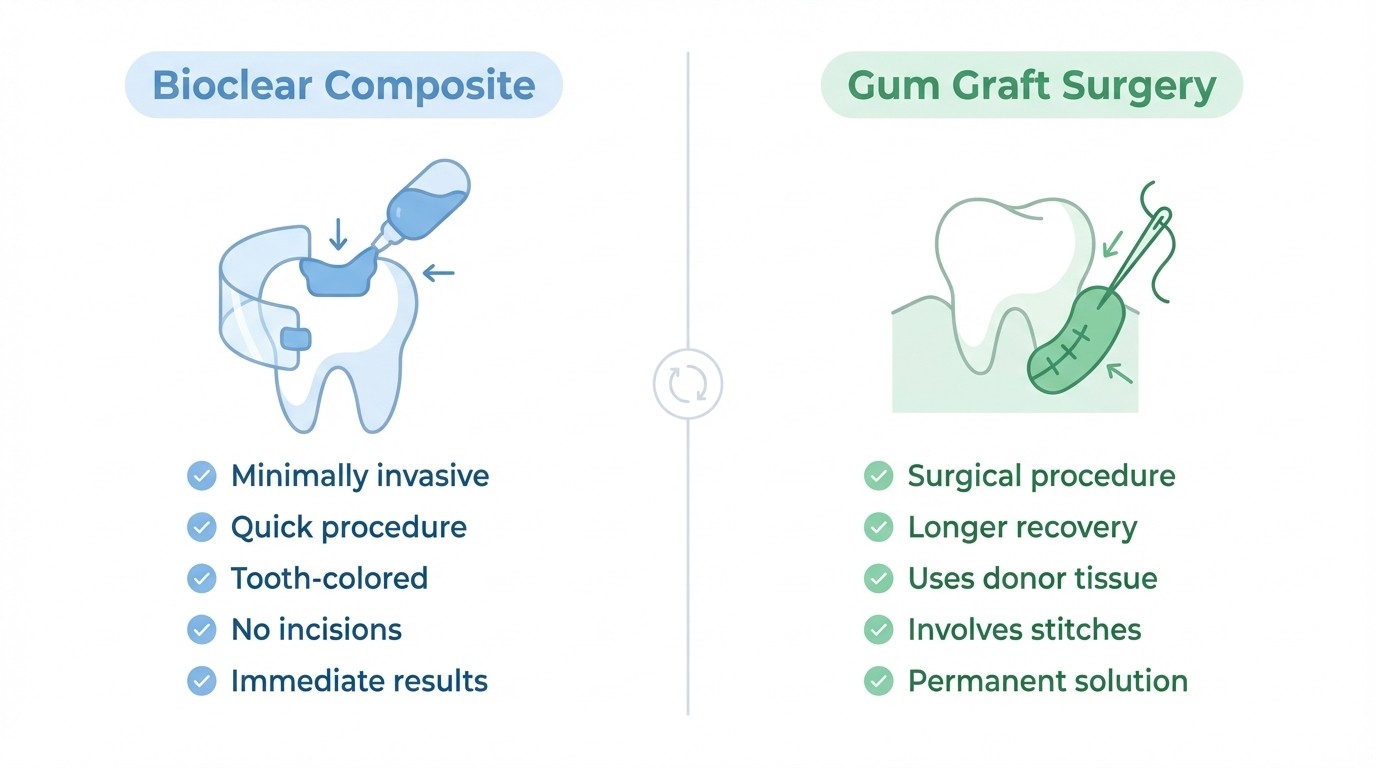
For gum recession-related black triangles, Bioclear and gum graft surgery are the two most frequently discussed options. They work on fundamentally different principles:
Factor | Bioclear Composite Restoration | Gum Graft Surgery |
|---|---|---|
Principle | Fills the gap between teeth with composite resin (repairs the tooth) | Transplants tissue to increase gum coverage (repairs the gum) |
Invasiveness | Minimally invasive; similar to a filling | Minor surgery; requires tissue harvesting |
Treatment time | One appointment; 30–60 minutes per tooth | 1–2 hour surgery + 2–4 weeks recovery |
Pain level | Virtually painless; anaesthesia often not needed | Local anaesthesia required; several days of post-operative discomfort |
Longevity | 5–10 years; can be repaired and refreshed | More durable; depends on periodontal health maintenance |
Best for | Stable recession; primarily aesthetic and food-trapping concerns | Severe recession; significant root exposure; need for additional gum tissue |
How to Choose?
If your black triangles are primarily an aesthetic concern and gum recession is mild, Bioclear is the quicker, more affordable option
If recession is already severe with significant root exposure, gum graft surgery may be needed first to restore gum tissue, potentially followed by Bioclear for cosmetic refinement
The two approaches can be combined: gum grafting to restore gum height, followed by Bioclear to fine-tune the tooth contour
Daily Care & Preventing Further Deterioration
Whether or not you've had restorative treatment, proper daily care is essential to prevent gum recession from worsening:
Correct Brushing Technique
Use a soft-bristled toothbrush and avoid applying excessive pressure
Adopt the Bass brushing technique: angle the brush at 45 degrees to the gum line and use gentle circular vibrations
Consider an electric toothbrush with built-in pressure control
Interdental Cleaning
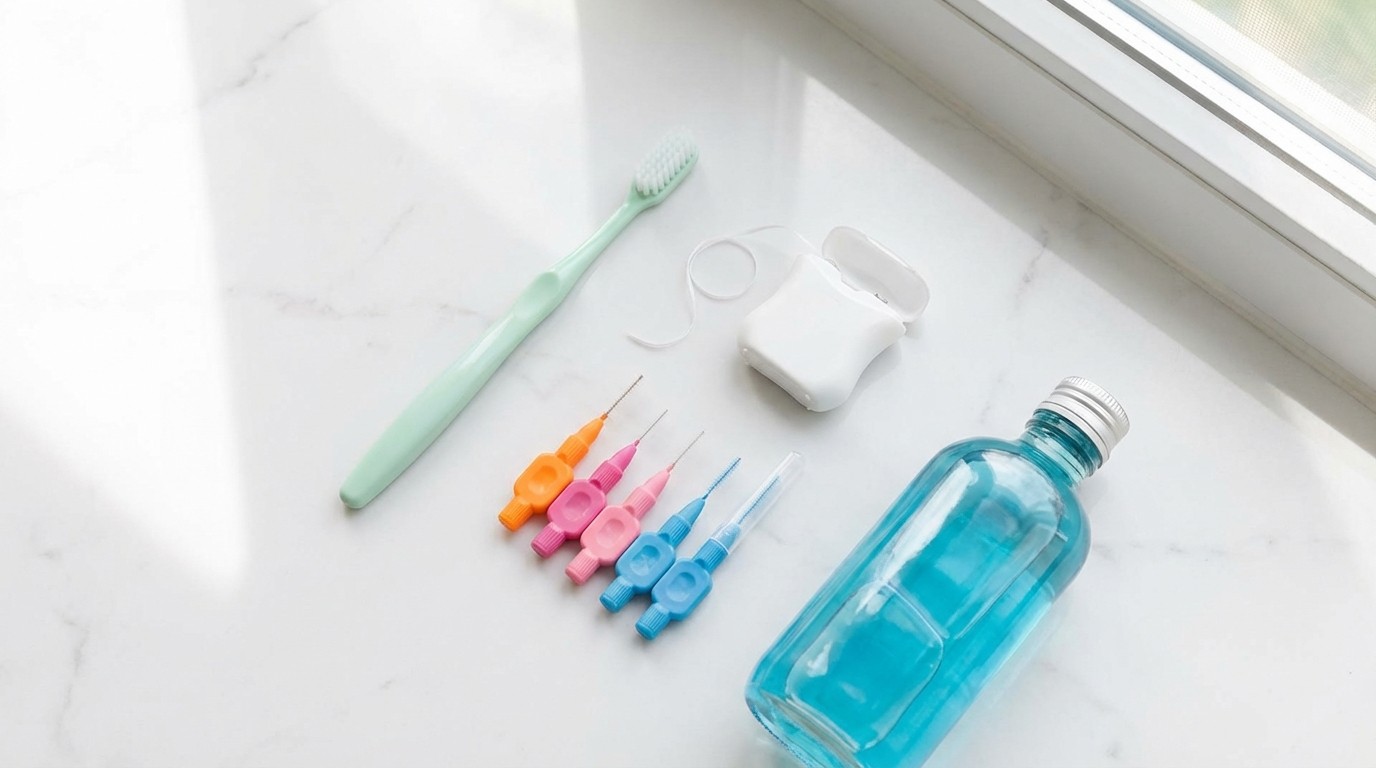
Use interdental brushes daily to clean the spaces between teeth
Select the correct brush size for each gap
Supplement with dental floss for tighter spaces
Regular Dental Visits
Every 6 months for professional cleaning and periodontal assessment
Monitor recession progression and intervene early if needed
If periodontal disease is present, visits may need to be every 3–4 months
Lifestyle Factors
Quit smoking: Smoking is a major risk factor for periodontal disease and gum recession
Balanced diet: Adequate vitamin C and D intake supports gum health
Address bruxism: If you grind your teeth, wear a night guard to protect your teeth and gums
Frequently Asked Questions
Can gum recession be reversed?
Receded gums cannot regrow on their own, but treatment can stop further deterioration. Gum graft surgery can increase gum coverage, and Bioclear can fill black triangle gaps. The most important step is identifying and controlling the root cause of recession (such as periodontal disease or improper brushing).
My gums are receding but my teeth don't hurt — do I need treatment?
Yes. Gum recession doesn't always cause pain, but it signals that periodontal tissue is being lost. Left untreated, it can lead to root sensitivity, cavities, worsening periodontal disease, and eventually tooth loss. Regular check-ups are recommended even without symptoms.
Is Bioclear suitable for all black triangles?
Bioclear is suitable for most mild to moderate black triangles, especially when the primary goals are improving aesthetics and reducing food trapping. For very severe recession with extensive root exposure, gum graft surgery may be needed first to restore gum tissue. Your dentist will recommend the most appropriate option based on your specific situation.
Is gum graft surgery painful? How long is recovery?
The surgery is performed under local anaesthesia and is painless during the procedure. You may experience mild swelling and discomfort for 1–2 weeks afterwards, usually manageable with over-the-counter painkillers. Full recovery typically takes 2–4 weeks. Soft foods and avoidance of irritating substances are advised during recovery.
Should I treat periodontal disease first or fix the black triangles first?
Always treat periodontal disease first. Periodontitis is one of the root causes of gum recession and black triangles — if it isn't controlled first, any restorative treatment will not produce lasting results. Typically, 2–4 months of periodontal therapy is needed before black triangle repair can be discussed.
Is gum recession related to ageing? Can it be prevented?
Yes, natural ageing is one factor in gum recession. While you can't completely stop the ageing process, good oral hygiene, proper brushing technique, regular dental check-ups, and not smoking can significantly slow the rate of recession. Early management of conditions like periodontal disease and bruxism is also important.
Black triangles caused by gum recession can be concerning, but they are far from untreatable. The key is seeking professional help early, controlling the periodontal condition, and choosing the right treatment approach. Modern dentistry offers several minimally invasive techniques that can effectively improve both the appearance and function of teeth affected by black triangles.
If you're experiencing gum recession or black triangles, or would like to learn more about Bioclear, gum graft surgery, or other treatment options, please contact Dr. Teri Yung Dental Central to book a consultation.

Book an Appointment
Schedule your visit now for personalized care in a comfortable environment. Your journey to a brighter, healthier smile begins here.