Teeth Whitening in Hong Kong: Options, Safety & What to Expect

Adult Dentistry
General Oral Care
Cosmetic Dentistry
Teeth Whitening in Hong Kong: Options, Safety & What to Expect
A bright, white smile is something many of us aspire to, but over time teeth naturally darken due to ageing, dietary habits, and lifestyle factors. If you are considering teeth whitening, understanding how the different methods work, what results to expect, and the safety considerations can help you choose a suitable approach.
Modern dentistry offers a range of whitening options, from professional in-office treatments to convenient take-home kits. Before starting any whitening, however, it is best to have a routine dental check-up so your dentist can assess the cause of discolouration and your oral health, and advise whether whitening is suitable.
Why Do Teeth Become Discoloured?
Understanding why teeth lose their whiteness is the first step to choosing the right whitening approach. Tooth discolouration falls into two main categories:
Extrinsic Staining
Colour deposits that accumulate on the tooth surface, commonly caused by:
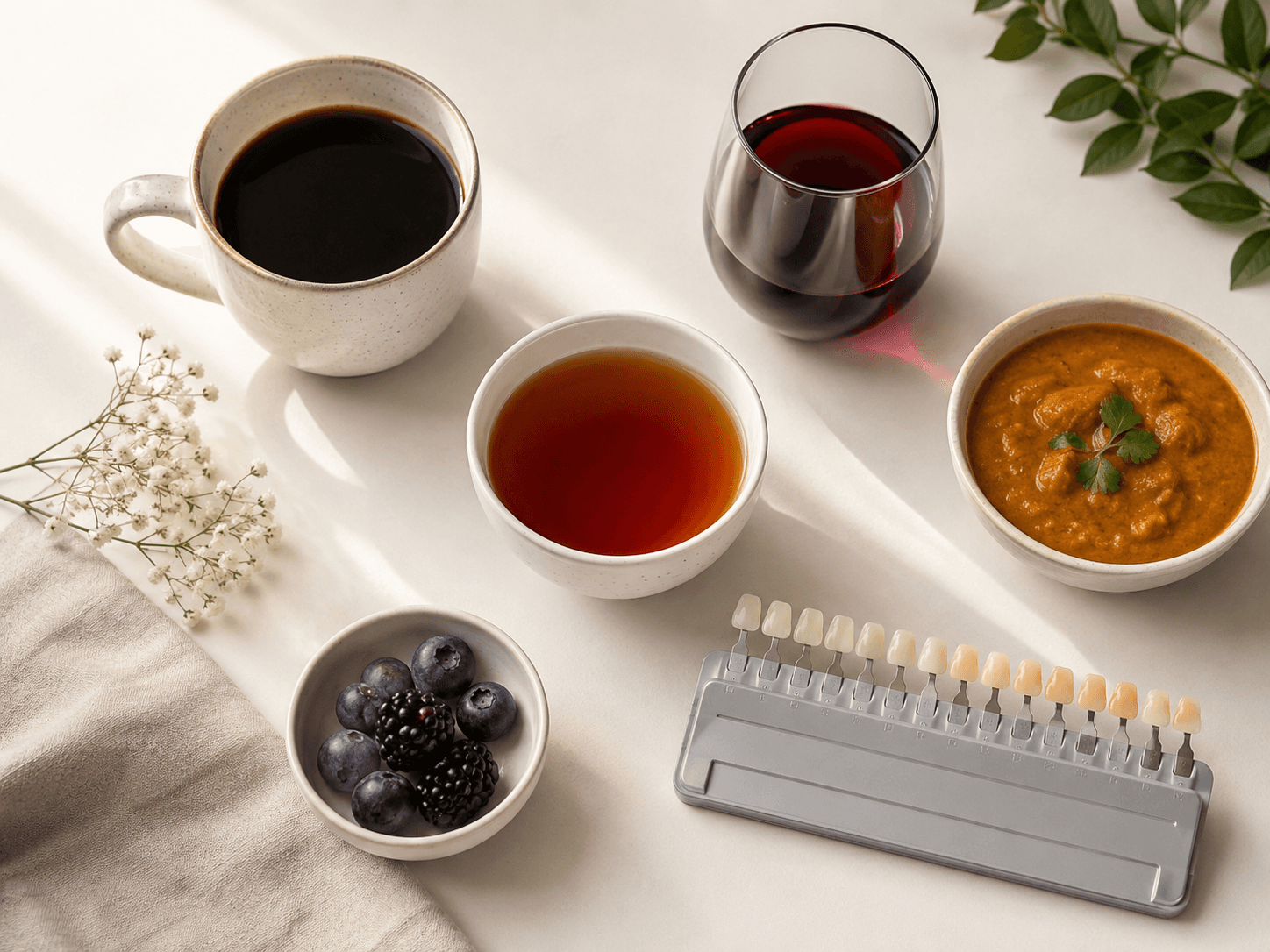
Diet: Coffee, tea, red wine, cola, curry, and other deeply pigmented foods and drinks
Tobacco: Smoking is one of the most significant causes of tooth staining
Inadequate oral hygiene: Plaque and tartar build-up can make teeth appear dull and discoloured
Extrinsic stains can often be removed through a professional scale and polish — this is the easiest type of discolouration to address.
Intrinsic Staining
Colour changes that occur within the tooth structure, commonly caused by:
Natural ageing: As enamel thins over time, the yellowish dentine underneath becomes more visible
Medications: Tetracycline antibiotics taken during childhood can cause permanent staining
Trauma or treatment: Teeth may darken after injury or root canal treatment
Fluorosis: Excessive fluoride intake during childhood can cause white or brown spots
Good to know: Different types of staining respond differently to whitening. Extrinsic stains generally respond best, while intrinsic staining (such as tetracycline discolouration) may require more sessions or alternative solutions such as veneers or dental crowns and bridges. A dental assessment before whitening helps determine the most appropriate approach.
Comparing Common Teeth Whitening Methods
Teeth whitening options in Hong Kong generally fall into three categories:
Method | How It Works | Results | Duration |
|---|---|---|---|
In-Office Professional Whitening | High-concentration hydrogen peroxide (25–40%) with light/laser activation | Immediate; up to 3–8 shades lighter | 6 months – 2 years |
Take-Home Professional Kit | Custom trays + medium-concentration gel (10–16% carbamide peroxide) | Gradual; visible in 1–2 weeks | 6 months – 2 years |
Over-the-Counter Products | Low-concentration peroxide or non-peroxide ingredients | Mild; mainly removes surface stains | Temporary; requires ongoing use |
In-Office Professional Whitening
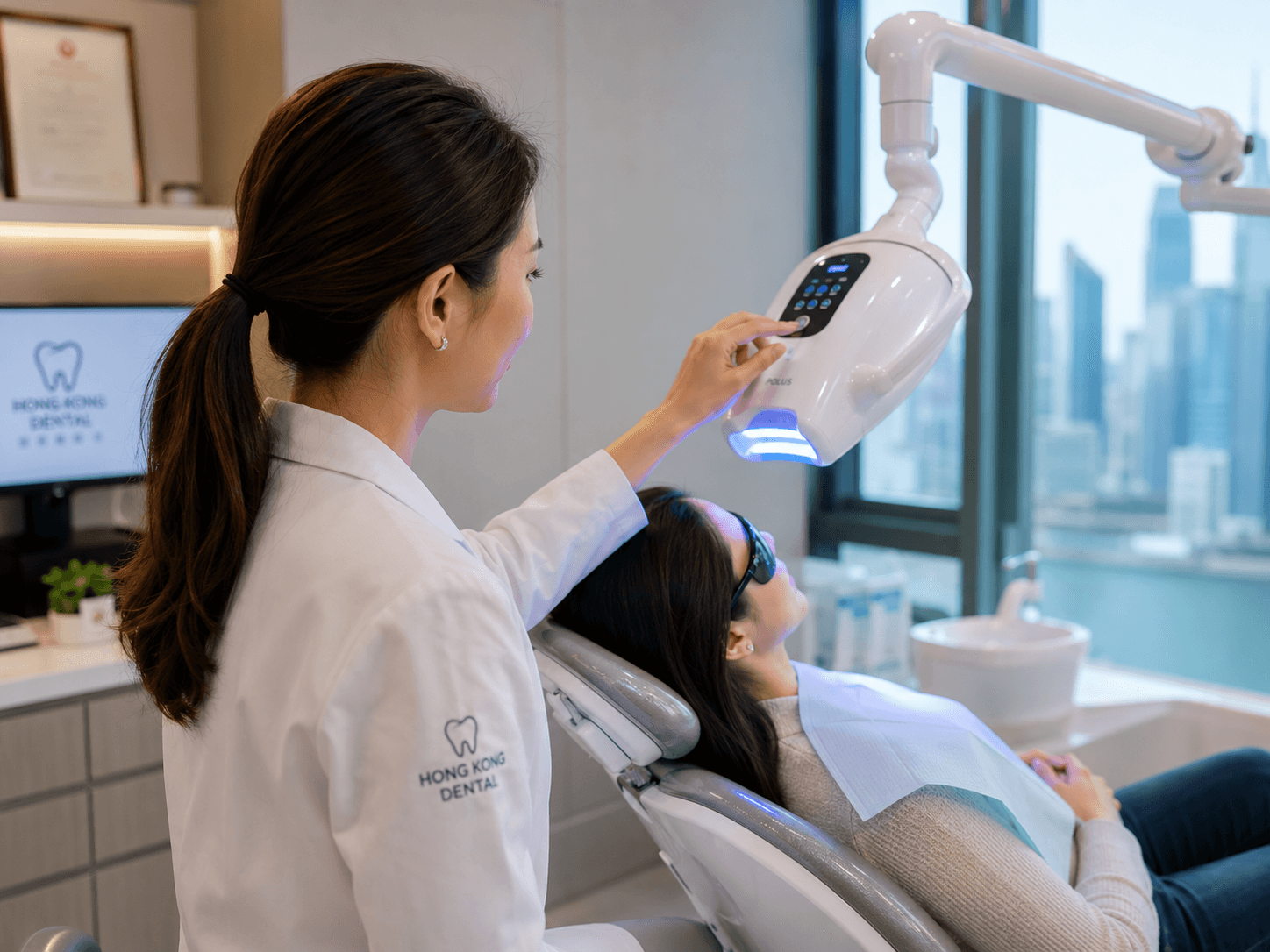
This option tends to produce the most noticeable results. The dentist applies a high-concentration hydrogen peroxide gel directly to the teeth and activates it with a specialised light source (LED or laser). The session typically takes 60–90 minutes, and results are usually visible straight away.
The process:
The dentist examines your oral health and confirms suitability for whitening
A professional clean removes surface stains and tartar
A protective barrier is applied to shield the gums and soft tissues
Whitening gel is applied to the tooth surfaces
The light source activates the gel for 15–20 minutes (may be repeated 2–3 times)
The gel is removed and results are assessed
Take-Home Professional Whitening Kit
Prescribed by your dentist, this option uses custom-fitted trays made from impressions of your teeth, along with a professional-grade whitening gel (typically carbamide peroxide). You wear the trays for 30 minutes to several hours per day (depending on the product) over 1–2 weeks. Results are more gradual but equally long-lasting, and the trays can be reused — you only need to purchase replacement gel for future touch-ups.
Over-the-Counter (OTC) Products
These include whitening toothpaste, strips, and pens. Their active ingredient concentration is much lower, and they primarily target surface stains. The advantages are convenience and low cost; the drawback is that results are modest and temporary.
Is Teeth Whitening Safe? Understanding Side Effects
Safety is one of the most common concerns about teeth whitening. Clinical research suggests that peroxide-based whitening products, when used correctly under dental supervision, are generally safe. However, all whitening treatments carry the possibility of side effects:
Common Side Effects
Tooth sensitivity: The most frequently reported side effect — around 58% of patients experience some degree of sensitivity during or after whitening. It is usually temporary and resolves within a few days of stopping treatment.
Gum irritation: Contact between the whitening agent and gum tissue may cause mild redness or discomfort, which typically resolves quickly after treatment ends.
Enamel effects: When used correctly, the impact on enamel is minimal. However, overuse or misuse (particularly of high-concentration products purchased without professional guidance) can lead to enamel erosion.
Important reminders:
Always have a dental check-up before whitening to rule out cavities, gum disease, or other issues
Never use high-concentration whitening products without professional supervision
Pregnant or breastfeeding women should avoid teeth whitening
Whitening will not change the colour of dental restorations (crowns, veneers, fillings) </aside>
How to Minimise Side Effects
Choose a professional whitening plan prescribed by your dentist to ensure proper concentration and timing
Use desensitising toothpaste (containing potassium nitrate or calcium phosphate) as a supportive measure
Follow your dentist's instructions carefully — do not exceed the recommended wear time or frequency
Avoid deeply coloured foods and beverages for 48 hours after whitening
Who Is a Good Candidate for Teeth Whitening?
Suitable candidates
Adults whose teeth have yellowed due to diet, ageing, or smoking
People with good oral health and no untreated cavities or gum disease
Those with realistic expectations about whitening outcomes
Who should avoid whitening
Pregnant or breastfeeding women
Adolescents under 16 (the dental pulp is not yet fully developed)
People with untreated cavities, gum disease, or oral ulcers
Those allergic to peroxide-based ingredients
Patients with extensive front-tooth restorations (crowns, veneers, etc.) — whitening will not change the colour of restorations, which may create a mismatch
Maintaining Your Whitening Results
To keep your smile brighter for longer, daily care matters:
Limit staining foods: Especially important in the first 48 hours after whitening, and continuing to moderate coffee, tea, and red wine intake afterwards
Maintain good oral hygiene: Brush twice daily, floss, and attend regular dental cleanings
Don't smoke: Tobacco is a leading cause of rapid re-staining
Periodic touch-ups: Use your take-home trays every 6–12 months for a brief touch-up to maintain results
Regular dental check-ups: Visit your dentist every 6 months for a professional clean and check-up
Frequently Asked Questions
Does teeth whitening damage your teeth?
When performed correctly under dental supervision, whitening is generally safe. Clinical research shows that peroxide-based whitening has minimal impact on enamel when used as directed. However, overuse or unsupervised use of high-concentration products can lead to enamel damage and persistent sensitivity. A routine dental check-up before whitening helps rule out cavities or gum problems.
How long do whitening results last?
Results typically last around 6 months to 2 years, depending on your diet, oral hygiene habits, and whether you smoke. Periodic touch-ups with a take-home tray can extend the duration of your results.
Which is more suitable — in-office or take-home whitening?
Both have their advantages. In-office whitening delivers faster, more immediate results and suits those who want quicker outcomes. Take-home kits are more affordable, allow you to control the pace of whitening, and the trays can be reused. Many patients start with in-office whitening and then maintain results with a take-home kit.
What should I do if my teeth are very sensitive during whitening?
Sensitivity is the most common side effect and is usually temporary. You can use desensitising toothpaste, reduce the frequency or duration of each session, and take a break if needed. If sensitivity persists, stop treatment and consult your dentist.
Do whitening toothpastes really work?
Whitening toothpastes work mainly through mild abrasives that remove surface stains, which can slightly brighten teeth. However, they cannot change the intrinsic colour of your teeth. For deeper discolouration, professional whitening is more effective. Be cautious with highly abrasive whitening toothpastes, as long-term overuse can damage enamel.
Final Thoughts
Teeth whitening can be an effective way to enhance your smile, but choosing the right method and having treatment under professional guidance is important. The most suitable approach depends on the cause of discolouration and your oral health, which your dentist can assess.
If you are considering teeth whitening, you are welcome to contact our clinic for a consultation to find out whether it is a suitable option for your oral health.
Book an Appointment
Schedule your visit now for personalized care in a comfortable environment. Your journey to a brighter, healthier smile begins here.