Bioclear System for Black Triangles: Suitability, Process and Limitations

Adult Dentistry
Aesthetic Restoration
Restorative Dentistry
Bioclear System for Black Triangles: Suitability, Process and Limitations
After orthodontic treatment or changes in gum support, some people notice triangular dark spaces between the front teeth near the gum line. These black triangles do not always mean the teeth have moved apart. They may relate to the shape of the teeth, reduced gum papillae, or loss of periodontal support.
Bioclear is one restorative option that uses a transparent matrix and composite resin to reshape the sides of teeth. A routine dental check-up is still needed first to identify the cause, assess gum health and decide whether restorative treatment is appropriate.
What Is the Bioclear System?
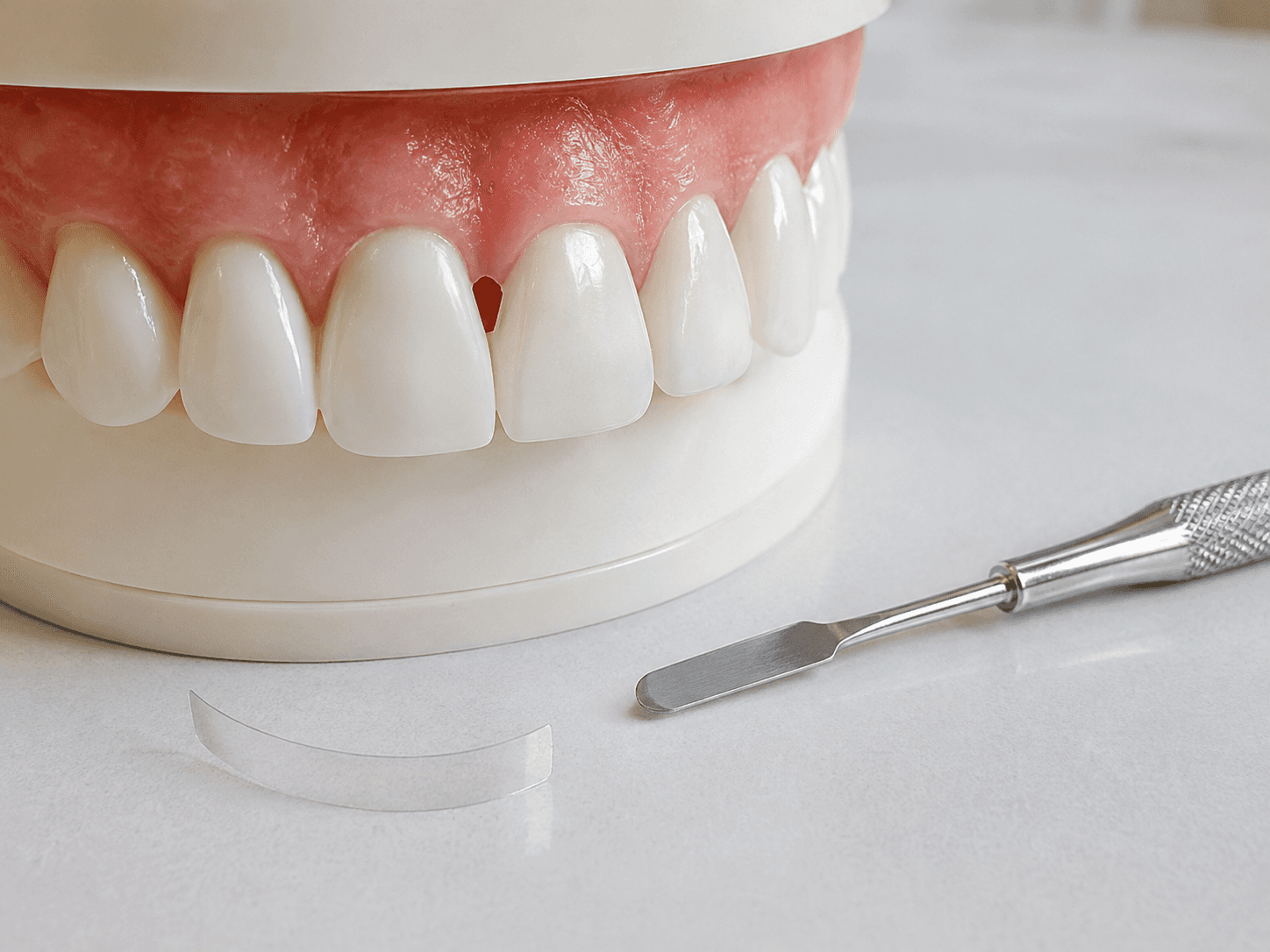
Bioclear is not a separate filling material. It is a restorative system that combines anatomically shaped transparent matrices, an adhesive protocol and composite contouring. Depending on the clinical protocol, warmed composite and an injection-moulding technique may be used. The matrix wraps around the side of a tooth and helps the dentist form a smooth contour from the gum area towards the contact point, reducing the visible open space.
The approach is more structured than simply adding a small amount of filling material into a gap. Attention is given to tooth proportions, the position of the contact area, surface smoothness, floss access and the way the restoration meets the gum. Clinical research suggests that anatomical matrices with an injection-moulding technique can be used to manage selected open gingival embrasures, although outcomes depend on the size of the space and the supporting tissues.
If the space became visible after braces or aligners, it may help to read about the causes and treatment options for black triangles after orthodontic treatment.
Which Black Triangles May Be Suitable?
Bioclear may be considered when gum health is stable, enough sound tooth structure remains and the main need is to modify the proximal tooth contour. Possible situations include:
anterior black triangles where the space, tooth proportions and periodontal condition are suitable for an additive restoration
triangular tooth shapes with a relatively high contact point
spaces revealed after orthodontic alignment
food trapping associated with an open gingival embrasure
an existing proximal restoration that needs reshaping
Three Points the Dentist Will Assess
Space and tooth proportions: whether closure would make the teeth appear too wide or asymmetrical.
Contact and cleaning access: whether the new contour can create an appropriate contact while still allowing floss or interdental cleaning.
Periodontal stability: whether the gum position, bleeding, pocketing and bone support are stable.
Active bleeding, loose teeth, deep periodontal pockets or continuing gum recession should be addressed first through appropriate gum disease treatment. Where the space is associated with periodontal tissue loss, this guide to gum recession and black triangles provides useful background.
What Does the Treatment Process Involve?
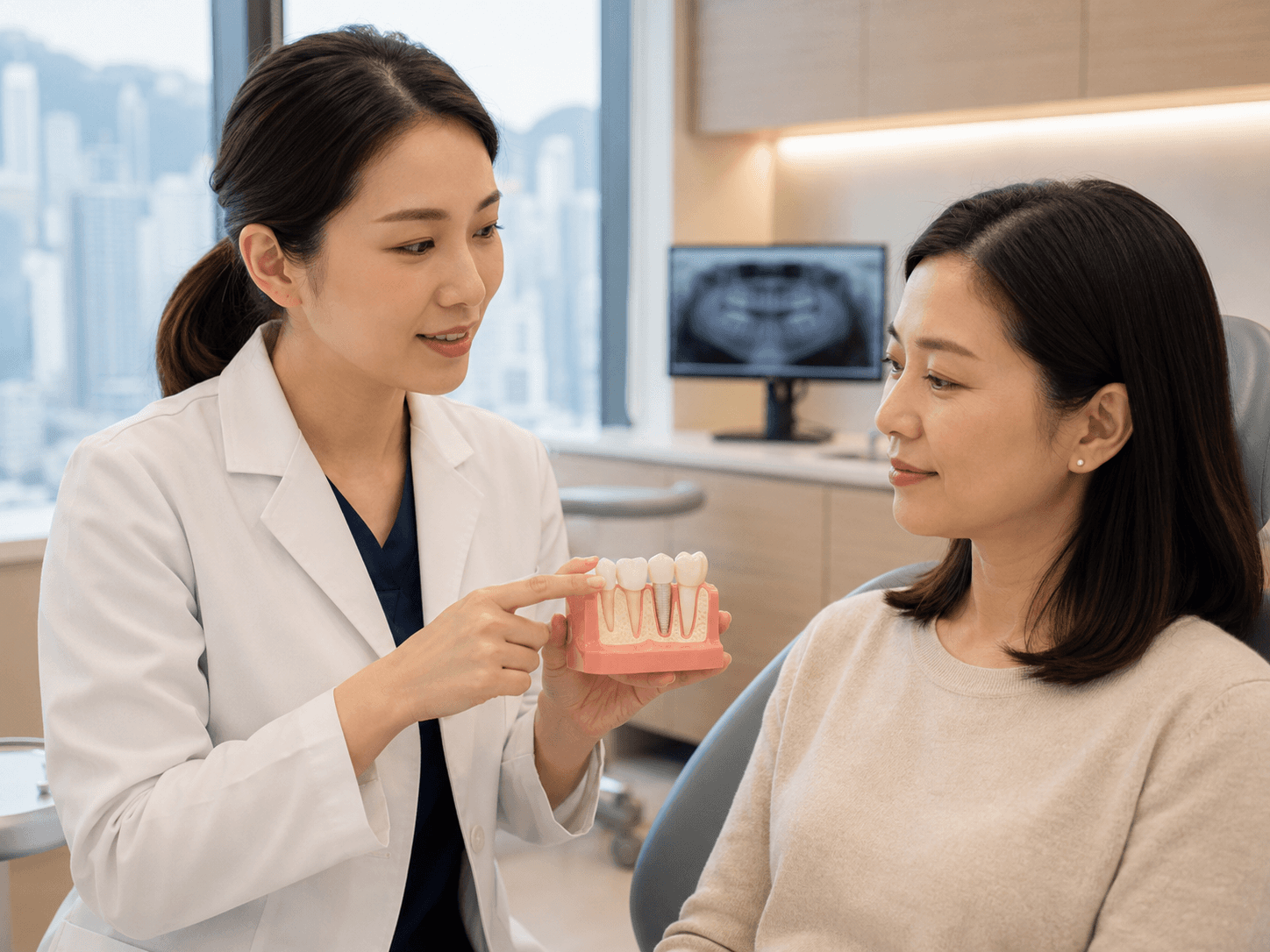
The exact process varies, but it may include:
Assessment and records — The dentist evaluates the gums, bone support, tooth shape, contact point and bite.
Cleaning the tooth surface — Plaque, staining and deposits that could affect bonding are removed.
Matrix selection — A transparent matrix is selected according to the tooth contour and embrasure size.
Bonding and resin placement — The tooth is isolated and prepared for bonding before composite resin is introduced and cured.
Checking the contact and bite — The dentist checks floss passage, contact tightness and occlusion.
Finishing and polishing — Margins and contours are refined to create a smooth, cleansable surface.
Treatment may take one or more appointments depending on the number of teeth and complexity. If the tooth has broader structural damage, other restorative options such as dental crowns and bridges may also need to be discussed.
Key Features of Bioclear
1. An additive approach to tooth contour
In suitable cases, composite resin is added to change the tooth shape, which may reduce the need for extensive removal of natural tooth structure. The surface still requires preparation for bonding, so the treatment should not be described as having no intervention at all.
2. Controlled shaping of the proximal surface
The transparent matrix helps form a continuous curve from the gum area towards the contact point. Whether the space can be fully closed depends on its size, tooth proportions and periodontal support.
3. The restoration can often be maintained
Composite resin can wear, stain or chip over time. In some situations, it may be polished or repaired locally rather than replaced completely. Maintenance requirements vary with diet, bite forces and oral hygiene.
Current research suggests that matrix-guided composite restoration can improve selected black triangles, but evidence comparing techniques and long-term durability remains limited. Bioclear should therefore not be presented as the standard answer for every black triangle; periodontal stability, tooth form and maintenance needs remain central to treatment planning.
How Does Bioclear Compare with Other Options?
Option | Main approach | Often considered when |
|---|---|---|
Bioclear or composite bonding | Adds material and reshapes proximal surfaces | Gums are stable and the black triangle is mild to moderate |
Orthodontic refinement | Moves teeth or changes the contact position | Tooth alignment or root angulation needs correction |
Periodontal treatment | Controls inflammation and manages supporting tissues | There is gum disease, recession or tissue loss |
Veneers or crowns | Uses indirect restorations to change tooth shape | There are wider concerns involving shape, colour or structure |
If alignment remains part of the problem, braces and Invisalign aligners may need to be considered before restorative work. No single method suits every black triangle.
Limitations and Points to Consider
Bioclear changes tooth contour. It does not regenerate lost bone or make a missing gum papilla grow back. If the black triangle is caused by active periodontal disease, restoring too early may create a difficult-to-clean margin and the space may reappear if the gum continues to recede.
Other considerations include:
Adding too much resin to a large space may make the teeth look too wide.
Heavy bite forces or tooth grinding may increase wear or chipping.
Composite resin may stain with time, coffee, tea or smoking.
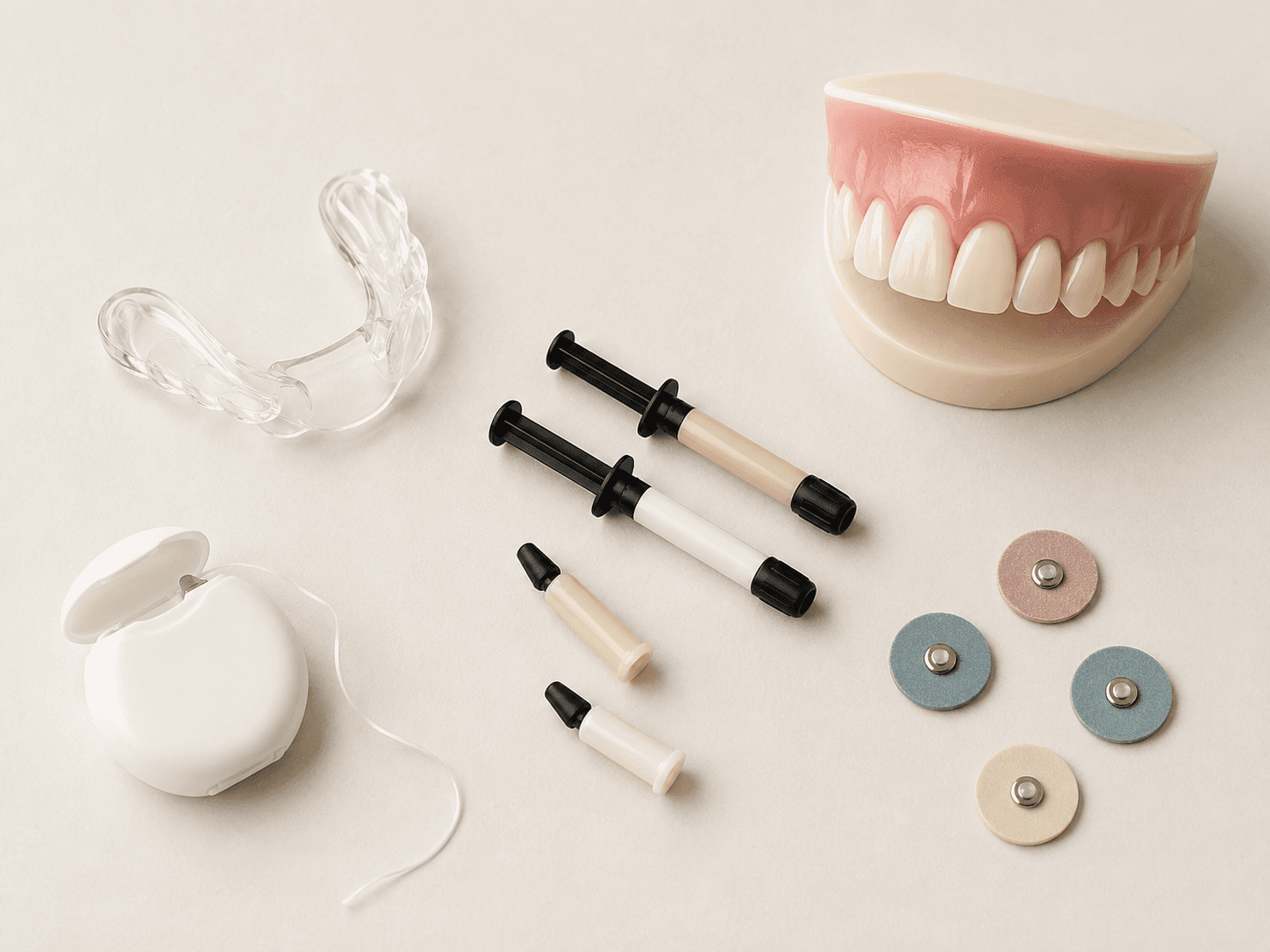
The margins and interdental area still require daily cleaning.
Longevity varies, so regular dental reviews remain important.
How Should the Area Be Cared for Afterwards?
Use floss or an appropriately sized interdental brush every day, but do not force an oversized brush through the restored area. Regular professional teeth cleaning can help manage plaque and allow the restoration margins to be checked.
Arrange a review if floss repeatedly catches, the surface feels rough, a piece chips, or the gum continues to bleed. Do not attempt to adjust the composite at home.
Frequently Asked Questions
Is Bioclear the same as an ordinary filling?
Both may use composite resin, but Bioclear places particular emphasis on anatomical matrices, injection moulding and full proximal contour. A dentist needs to decide whether this technique is appropriate for the space.
Can Bioclear make the gum grow back?
No. It reduces the visible space by changing the tooth contour; it does not regenerate gum or bone. Periodontal assessment is needed when supporting tissues have been lost.
Can every black triangle be closed completely?
Not always. The size of the space, tooth proportions, root position and bone support all affect the result. Sometimes reducing food trapping and improving the appearance is more appropriate than forcing complete closure.
Can I still floss after treatment?
Yes. Interdental cleaning remains essential. Your dentist should check that floss can pass through the contact and advise you on suitable cleaning aids.
Can someone with gum disease have Bioclear treatment?
It may be possible after the disease and inflammation are controlled and the gum position is stable. These common signs of periodontal disease can help you recognise when an assessment is needed.
Final Thoughts
Bioclear is a direct composite option for selected black triangles. Its purpose is to improve the contour of the tooth using a matrix-guided technique, not to replace missing gum or bone. Careful diagnosis is therefore more important than simply trying to close every visible space.
If you have noticed any of the situations described above, you are welcome to contact our clinic for a consultation to determine whether further assessment or treatment is needed.

Book an Appointment
Schedule your visit now for personalized care in a comfortable environment. Your journey to a brighter, healthier smile begins here.