The Advantages of All-on-4 Dental Implants: What Hong Kong Patients Should Know
Adult Dentistry
Restorative Dentistry
Dental Implants
The Advantages of All-on-4 Dental Implants: What Hong Kong Patients Should Know
Missing several teeth, or struggling with loose dentures, can affect eating, speech, confidence, and everyday comfort. For some adult patients, All-on-4 dental implants may be one possible option for restoring a full arch of teeth using a fixed implant-supported restoration.
If you are exploring different dental implant options in Hong Kong, All-on-4 may be one approach to understand. However, All-on-4 treatment is not suitable for everyone. A detailed dental assessment is needed to evaluate your gum health, bone level, bite, medical history, and long-term maintenance needs before deciding whether this approach is appropriate
What Are All-on-4 Dental Implants?
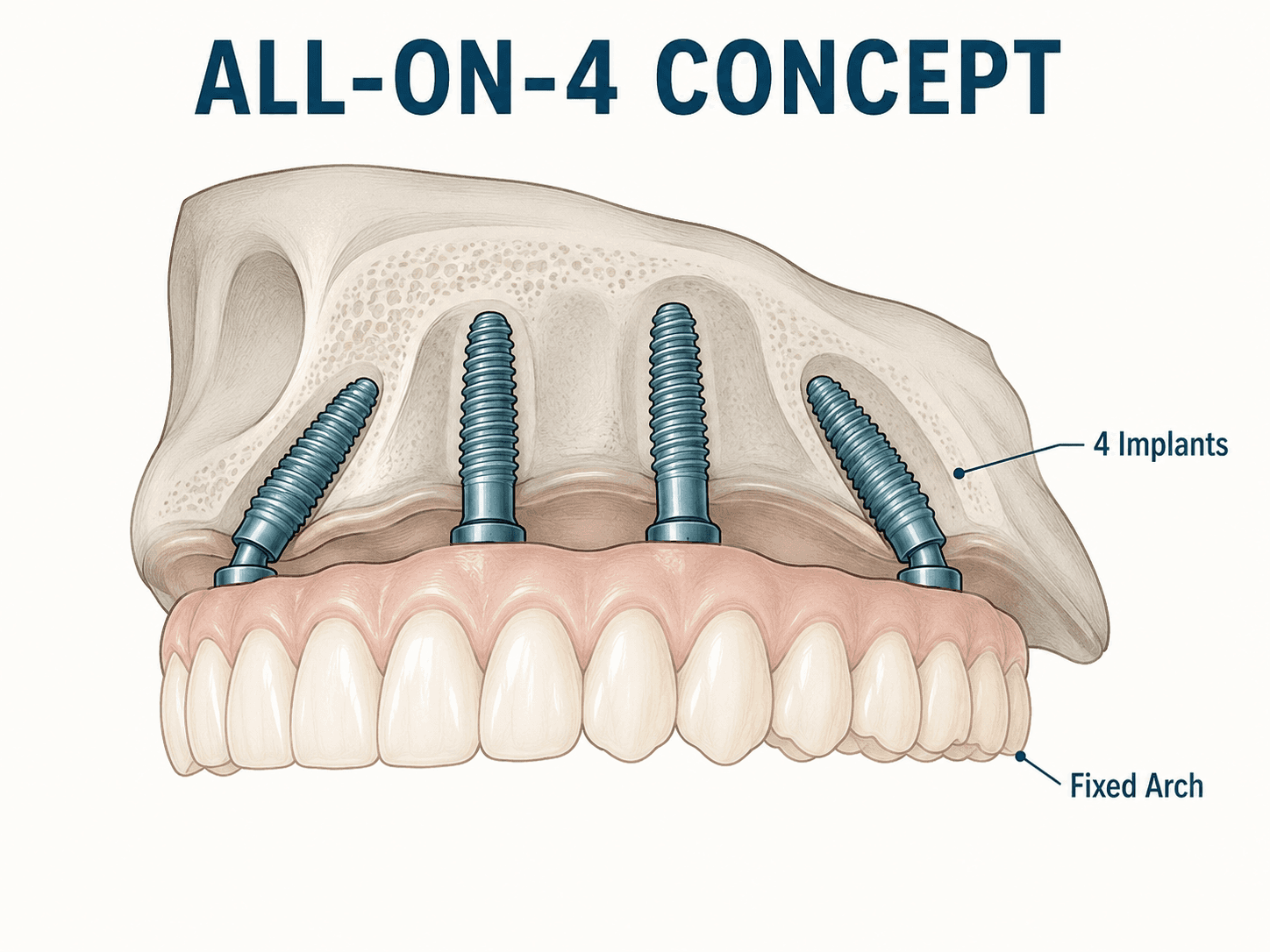
All-on-4 is a full-arch implant restoration concept. In many cases, four dental implants are used to support a fixed set of replacement teeth across the upper or lower jaw.
Unlike replacing each missing tooth with an individual implant, All-on-4 focuses on restoring the whole arch as one planned unit. The implants are positioned to provide support for a full-arch prosthesis, helping to support stability and function in suitable cases. If you would like to understand the basics of implants first, you may also read this complete guide to dental implants in Hong Kong.
Compared with removable dentures, All-on-4 restorations are usually fixed in place and are not removed by the patient every day. This may be helpful for people who find that removable dentures move during eating or speaking.
Who May Be Suitable for All-on-4?
All-on-4 is most often considered for adult patients who are missing most or all teeth in one jaw, or whose remaining teeth have a poor long-term outlook and require a broader restorative plan. Before discussing treatment options, a dentist will usually begin with a detailed routine dental check-up to assess the teeth, gums, bite, and bone support.
Patients may wish to discuss All-on-4 if they:
are missing several teeth in the upper or lower jaw
have difficulty eating comfortably with removable dentures
want to understand fixed full-arch tooth replacement options
are experiencing reduced chewing function due to missing teeth
need a more comprehensive approach to restoring the bite and smile
Suitability depends on more than the number of missing teeth. Gum health, bone volume, smoking habits, medical conditions, oral hygiene, and bite forces all matter. If there are signs of gum disease, loose teeth, or bleeding gums, gum disease treatment may need to be considered before implant planning.

Key Advantages of All-on-4 Dental Implants
All-on-4 treatment is often discussed because it may offer several practical benefits for suitable full-arch restoration cases. These benefits should always be considered together with the patient’s overall dental condition.
1. More fixed support than some removable dentures
Because the restoration is supported by dental implants, All-on-4 may provide more fixed support than some removable dentures in suitable cases. This may help reduce movement when eating or speaking.
2. Support for chewing function
Missing teeth or unstable dentures can limit the types of food a person feels comfortable eating. A fixed full-arch restoration may help support chewing function in suitable cases, although adaptation and ongoing care are still required.
3. A fixed restoration for everyday use
All-on-4 restorations are generally fixed in the mouth and are not removed by the patient each night. For some people, this can feel more convenient and closer to the experience of having fixed teeth.
4. Restoring smile appearance and facial support
Long-term tooth loss can affect the appearance of the smile and the support of the lips and face. A full-arch restoration is planned with attention to tooth position, bite, and facial balance. Like other fixed restorations such as dental crowns and bridges, an All-on-4 restoration should be planned with both function and long-term maintenance in mind.
5. A comprehensive treatment plan
Rather than treating multiple missing teeth separately, All-on-4 involves planning the full arch as a whole. This allows the dentist to consider function, aesthetics, cleaning access, and long-term maintenance together.
What Does the Treatment Process Involve?
All-on-4 treatment requires careful planning. The exact process varies from person to person, but it may include the following stages:
Initial consultation and oral examination
The dentist checks your teeth, gums, bite, existing dentures or restorations, and general oral condition.
Imaging and assessment
X-rays or 3D scans may be needed to evaluate bone volume, implant positioning, nearby nerves, and sinus anatomy.
Treatment planning and discussion
Your dentist explains the possible options, including All-on-4, removable dentures, bridges, or other implant-supported approaches. If you feel nervous about dental treatment, this guide on overcoming dental anxiety may help you prepare for the consultation.
Implant placement and temporary restoration
If suitable, implants are placed according to the treatment plan. A temporary restoration may be used while healing and adaptation take place.
Final restoration and maintenance
After the tissues have healed and the situation is stable, the final restoration is made and adjusted. Regular reviews are important for long-term monitoring.

All-on-4 vs Removable Dentures
Removable dentures are taken out by the patient for cleaning and usually rely on the gums, oral muscles, and denture design for retention. For some patients, they work well. For others, they may feel loose or uncomfortable during eating and speaking.
All-on-4 restorations are supported by implants and are usually fixed in place. They may offer more fixed support in suitable cases, but they also require careful cleaning, regular dental reviews, and healthy supporting tissues.
Neither option is automatically “better” for every patient. The right choice depends on oral health, bone support, expectations, budget considerations, cleaning ability, and medical factors. A personalised assessment is essential.
What Should Patients Consider Before Treatment?
Before considering All-on-4 dental implants, it is important to understand the following points:
Gum health matters: Active gum disease may need to be controlled before implant treatment.
Bone volume needs assessment: Bone quantity and quality affect implant planning.
Smoking may affect healing: Patients should discuss smoking habits honestly with their dentist.
Daily cleaning remains essential: Implant-supported restorations still require careful oral hygiene.
Treatment timelines vary: Not every case follows the same schedule, and some patients may need preparatory treatment first.
Frequently Asked Questions
Are All-on-4 dental implants suitable for everyone?
No. Suitability depends on gum health, bone volume, bite, medical history, smoking habits, and oral hygiene. A dentist needs to assess your individual situation before recommending any implant treatment. You may also read this dental implant guide for background information before your consultation.
How is All-on-4 different from regular dental implants?
Regular dental implants may be used to replace one or several missing teeth individually. All-on-4 is designed to support a full arch of replacement teeth using a planned implant-supported restoration.
Do All-on-4 implants need cleaning?
Yes. Although the restoration is fixed, the gums, implant areas, and space beneath the restoration still need daily cleaning. Your dental team can recommend appropriate cleaning tools and techniques.
Can I have All-on-4 treatment if I have gum disease?
It depends on the severity and control of the gum disease. Active gum problems may affect implant stability and long-term health, so periodontal treatment may be needed before implant planning.
Is All-on-4 always better than removable dentures?
Not always. All-on-4 and removable dentures suit different needs and clinical situations. Some patients may be suitable for fixed implant-supported treatment, while others may be better served by removable dentures or alternative options.
Final Thoughts
All-on-4 dental implants may be a useful option for some adult patients with multiple missing teeth or full-arch tooth loss. In suitable cases, they can support stability, chewing function, and a fixed restoration for daily use.
If you have noticed any of the situations described above, you are welcome to contact our clinic for a consultation to determine whether further assessment or treatment is needed.

Book an Appointment
Schedule your visit now for personalized care in a comfortable environment. Your journey to a brighter, healthier smile begins here.