
How to Overcome Dental Anxiety: Practical Tips for a Stress-Free Visit

Adult Dentistry
Family Dentistry
General Oral Care
How to Overcome Dental Anxiety: Practical Tips for a Stress-Free Visit
For many people, the thought of visiting the dentist triggers nervousness or even genuine fear — and you are far from alone. Research shows that approximately 36% of the global population experiences some degree of dental anxiety, with around 12% suffering from extreme dental phobia. This fear often leads to repeated postponement of dental visits, turning minor issues into major problems that ultimately require more complex and uncomfortable treatment.
The good news is that dental anxiety can be managed and overcome. This guide explores the common causes of dental fear and provides practical strategies for before, during, and after your visit to help you gradually build confidence.
Common Causes of Dental Anxiety
Understanding the source of your fear is the first step to overcoming it:
Past Negative Experiences
Painful childhood treatments, an unsympathetic dentist, or feeling forced into procedures can leave lasting negative memories that become the root of future anxiety.
Fear of Pain
Worrying that treatment will hurt is one of the most common reasons. Even though modern anaesthesia techniques have greatly reduced discomfort during procedures, this anticipatory anxiety persists.
Loss of Control
Lying in the dental chair, mouth open, unable to speak — this passive state can make some people feel vulnerable and helpless.
Fear of Instruments
The sound of the dental drill, the sight of sharp instruments — these sensory triggers can provoke an anxiety response even before treatment begins.
Fear of Judgement
Some patients worry that the dentist will criticise their oral hygiene, leading to embarrassment or shame that keeps them from seeking care.
Important: Dental anxiety is not “overreacting” or “being weak.” It is a genuine psychological response, and a good dentist will understand and respect your feelings.
The Consequences of Avoiding the Dentist
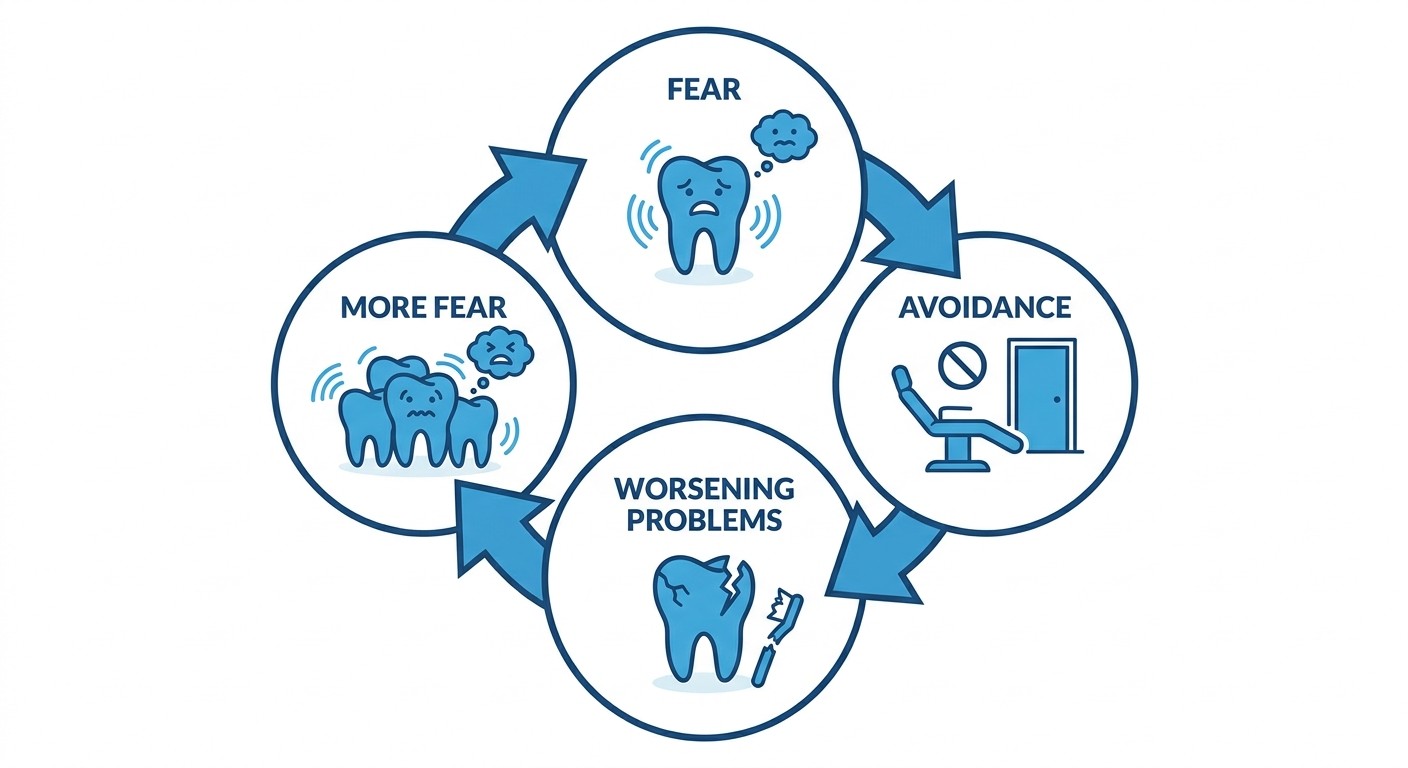
Delaying dental care can trigger a vicious cycle:
Small problems become big ones: An early cavity needs only a simple filling; left untreated, it may require root canal treatment or even extraction. The same applies to gum issues — keep an eye on the warning signs that may indicate periodontal treatment is needed
Increasing pain: Untreated dental issues tend to get worse over time, ultimately forcing you to seek care under more urgent and stressful circumstances
Higher costs: Complex treatments cost far more than preventive care
Impact on overall health: Research links poor oral health to cardiovascular disease, diabetes, and other systemic conditions
Practical Strategies to Overcome Dental Anxiety
Before Your Appointment
Choose the right dentist: Finding a patient, communicative dentist is essential — see our guide on how to choose the right dentist for what to look for. Consider calling the clinic or visiting in person beforehand to get a feel for the environment
Communicate openly: Let the clinic know about your anxiety when booking so the team can prepare
Pick the right time: Avoid scheduling during busy periods or when you are already stressed; mornings tend to work well
Learn about your treatment: Understanding the steps involved reduces the fear of the unknown
Limit caffeine: Avoid coffee or caffeinated drinks before your appointment, as they can heighten anxiety
During Your Appointment
Agree on a stop signal: Arrange a hand gesture with your dentist (e.g. raising your hand) so you can pause treatment at any time
Practice deep breathing: When tension builds, try diaphragmatic breathing — inhale slowly through the nose for 4 seconds, hold for 4 seconds, exhale through the mouth for 6 seconds
Distract yourself: Bring headphones to listen to music or a podcast, watch the ceiling-mounted TV (if available), or visualise a calming scene
Use a stress ball: Having something to squeeze gives your hands something to do and helps release tension
Take it step by step: If you are very anxious, start with a simple routine check-up or professional teeth cleaning — both are non-invasive ways to build confidence before proceeding to other treatment
After Your Appointment
Acknowledge your achievement: Completing a visit is a genuine accomplishment. Every positive experience builds a new, healthier association with dental care
Journal your feelings: Write down how the visit went so you can remind yourself next time that “I got through it before”
Reward yourself: Do something you enjoy after your appointment to create a positive association

How Can Your Dentist Help?
Modern dental clinics offer several options to help anxious patients:
Method | Description | Suitable For |
|---|---|---|
Topical anaesthetic gel | Applied before a local anaesthetic injection to minimise the needle sensation | All treatments requiring anaesthesia |
Nitrous oxide sedation | Inhaled gas that produces mild sedation and relaxation; wears off within minutes after treatment | Moderate anxiety |
Oral sedation | A prescribed sedative taken before treatment; requires someone to accompany you | Moderate to severe anxiety |
IV sedation | Sedative administered intravenously; you remain semi-conscious but feel no pain or anxiety | Severe anxiety or complex procedures |
Gentle pacing | Longer treatments split into shorter appointments to avoid overwhelming you | All anxious patients |
Reminder: Before using any sedation method, your dentist will review your health history and any drug allergies. After oral or IV sedation, you will need someone to accompany you home and should not drive for the rest of the day.
Dental Anxiety in Children
Children’s dental fears require special attention:
Your attitude matters: Avoid expressing negative feelings about the dentist in front of your child
Use positive language: Say “the dentist will count your teeth” rather than “it won’t hurt” — the latter actually makes children think of pain
Start early: Building a routine of regular dental visits from a young age helps children feel safe in the clinic environment
Choose a child-friendly clinic: A dedicated children's waiting area and a dentist experienced in paediatric care can significantly reduce a child's anxiety
📖 Further reading: When Should Your Child First Visit the Dentist?
Frequently Asked Questions
Can dental anxiety be completely overcome?
Most people can significantly reduce their anxiety using the strategies described above. While eliminating every trace of nervousness may not be realistic, positive experiences build up over time, and most patients find visits become progressively easier. If anxiety is severely impacting your daily life, consider speaking with a mental health professional.
Is nitrous oxide sedation safe?
Nitrous oxide has been used in dentistry for over 150 years and has a well-established safety record. Its effects are mild — you will feel relaxed but remain fully conscious and able to respond to your dentist’s instructions. The gas wears off within minutes of removal.
I’m terrified of my first dental visit — can I just have a check-up?
Absolutely. In fact, we encourage anxious patients to start with a simple examination and conversation. This lets you understand your oral health, build rapport with the dentist, and then schedule treatment when you feel ready. A good dentist will never pressure you into any procedure.
Can I stop treatment at any point if I feel uncomfortable?
Yes, without question. We recommend agreeing on a pause signal (e.g. raising your left hand) before treatment begins. Whenever you need a break or feel uncomfortable, simply signal and your dentist will stop immediately. You are always in control.
My child is afraid of the dentist — what should I do?
Stay calm and avoid forcing the visit. Choose a dentist experienced with children, use positive language (e.g. “the dentist will check your teeth”), and start with a simple examination so your child can gradually get used to the clinic. Never use a dental visit as a threat or punishment. Addressing concerns like thumb sucking and other oral habits through routine visits also helps build positive familiarity.
Dental anxiety is a common and entirely understandable response. What matters most is not letting fear stand in the way of looking after your oral health. Finding a dentist who understands you, using relaxation techniques, and building confidence step by step — these are all effective paths toward a calmer dental experience. Even more involved procedures such as dental implants can be managed comfortably with the right pacing and support. If you are looking for a dentist who prioritises patient comfort, we would love to hear from you.
Have a question? Get in touch via WhatsApp:


Book an Appointment
Schedule your visit now for personalized care in a comfortable environment. Your journey to a brighter, healthier smile begins here.