
Why Do Black Triangles Trap Food? Cleaning Tips and Gum Warning Signs

Adult Dentistry
Oral Hygiene
Periodontal Care
Why Do Black Triangles Trap Food? Cleaning Tips and Gum Warning Signs
Food repeatedly getting caught between the same teeth may be more than an everyday nuisance. If you can see a triangular dark space near the gumline, the black triangle between your teeth creates an open area where food and plaque can collect more easily. Using the wrong tool or too much force may also irritate the gums
Daily cleaning can reduce trapped debris and plaque, but it cannot reliably regrow lost interdental papilla. If a black triangle comes with bleeding, swelling, bad breath, gum recession or a widening gap, a routine dental check-up can help determine whether the cause relates to gum health, tooth shape, tooth position or the bite
Why Do Black Triangles Trap Food?
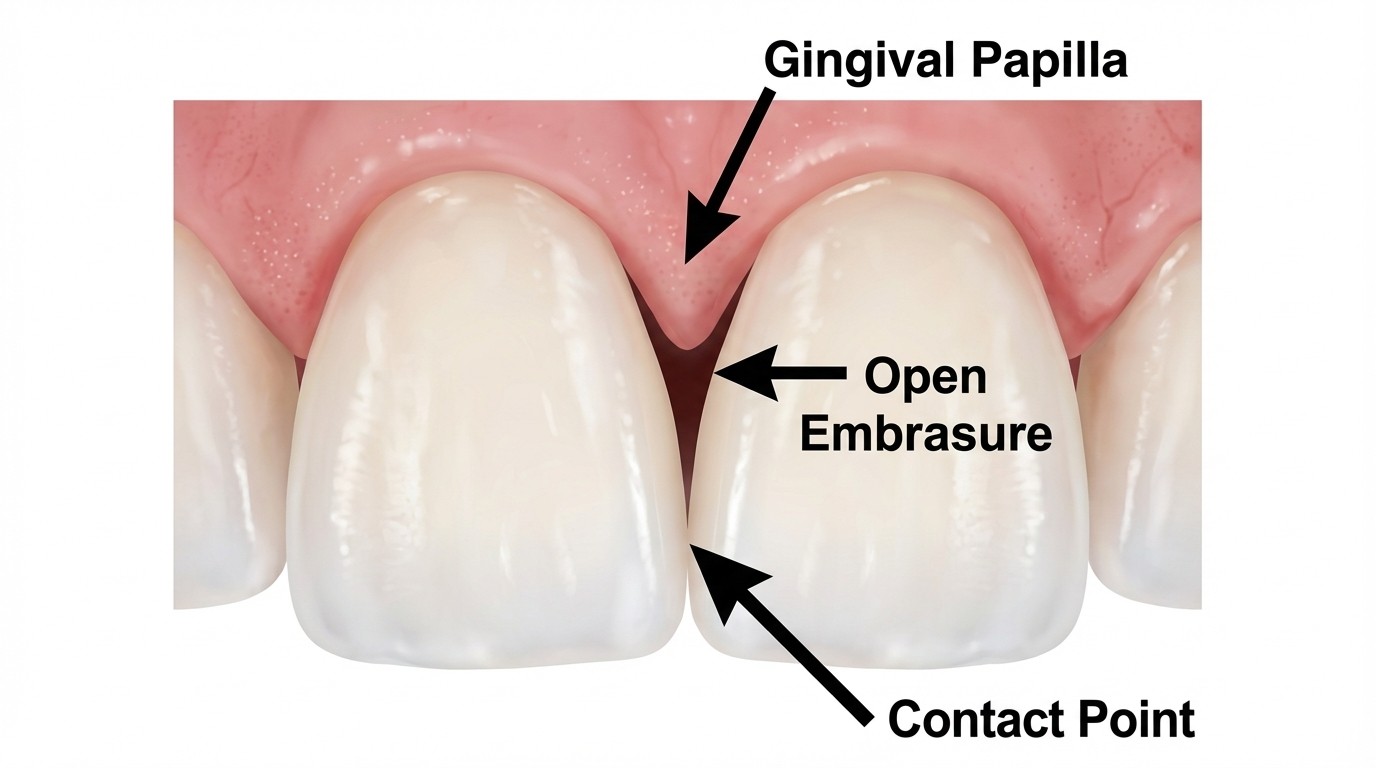
A black triangle is an open space near the gumline between two adjacent teeth where the interdental papilla no longer fills the entire area. Dentists refer to this as an open gingival embrasure. It may be associated with gum recession, bone support, tooth shape, the position of the contact area or changes after orthodontic treatment.
When the space is open, fibrous foods can be pushed into it during chewing. Research has also linked open gingival embrasures with food retention and added challenges for periodontal health.Research on interdental papilla and contact areas
If the space became noticeable after braces or aligners, this guide to black triangles after orthodontic treatment explains common contributing factors. A growing space accompanied by gum recession may need a periodontal assessment
Are Black Triangles Only a Cosmetic Concern?
Black triangles do not automatically mean that you have tooth decay or advanced gum disease, but they should not always be dismissed as purely cosmetic. Repeated food and plaque retention can make the area harder to keep clean and may irritate already vulnerable gum tissue
You may notice:
food catching in the same space after meals
plaque collecting near the gumline
bleeding or an unpleasant smell when flossing
sensitivity around an exposed root surface
changes in speech or concern about the appearance of the front teeth
Good cleaning can help control plaque and inflammation. It cannot address active periodontal breakdown by itself. If gum problems are suspected, gum disease treatment or a more detailed periodontal assessment may be needed
Should You Use Floss, an Interdental Brush or a Water Flosser?
The right tool depends on the size of the space, gum condition, tooth position, existing dental work and how comfortably you can use it. A larger brush or stronger water pressure is not automatically more effective.
1. Floss for tighter contact areas
Floss is useful where the teeth still contact closely. Guide it gently between the teeth, curve it into a C shape against one tooth and move it up and down before cleaning the other side. Avoid snapping the floss into the gum.
2. Interdental brushes for open spaces
If an interdental brush can pass through the black triangle without force, it may contact the open tooth surfaces more effectively. The bristles should fit gently without the wire scraping the teeth or gums. Different spaces may require different sizes, so professional sizing is helpful.
3. Water flossers as an additional option
A water flosser may help remove loose debris, particularly around braces, bridges or areas that are difficult to reach with string floss. Whether it can replace another interdental tool depends on the individual space and plaque pattern. The American Dental Association notes that interdental cleaning helps remove debris and plaque from surfaces a toothbrush cannot reach.ADA guidance on interdental cleaners
What Cleaning Mistakes Can Irritate the Gums?
Bleeding after cleaning is not proof that a tool is “detoxifying” the gums. It may reflect inflammation, excessive pressure or an unsuitable brush size.
Common mistakes include:
forcing an oversized interdental brush into the gap
sawing aggressively across the gum tissue
repeatedly picking the area with a wooden toothpick
removing food without cleaning both tooth surfaces
abandoning interdental cleaning completely because of bleeding
changing tools repeatedly while the gap continues to widen
The NHS advises that interdental brushes may be useful where there are spaces between teeth, while wooden toothpicks can damage the gums.NHS guidance on cleaning between teeth
Which Gum Warning Signs Need a Dental Assessment?
Occasional food trapping may improve with the right technique. Seek an assessment if any of the following persists or worsens:
gums that bleed regularly during brushing or interdental cleaning
red, swollen, painful gums or discharge
persistent bad breath or an unpleasant taste
gums receding and exposing more of the root
a black triangle becoming noticeably larger
teeth becoming loose, moving or feeling different when you bite
repeated food trapping accompanied by sensitivity or pain
Bleeding, swelling, recession and loose teeth can be signs of gum disease, although an examination is needed to confirm the cause.NHS information on gum disease
What Can Daily Care Achieve?
Daily care aims to remove trapped food and plaque, control inflammation and monitor whether the space remains stable. It cannot guarantee that lost papilla will return, and it does not replace periodontal, orthodontic or restorative assessment.
Helpful habits include:
cleaning between the teeth once a day with a suitable tool
using a soft-bristled toothbrush without scrubbing the gumline aggressively
using floss or an appropriately sized interdental brush rather than a sharp object after meals
arranging regular professional teeth cleaning and dental reviews
following specific cleaning advice around any black-triangle restoration
If appearance or treatment options are your main concern, you may also read the guide to gum recession and black triangles and the article on the Bioclear system for black triangles.

Frequently Asked Questions
Does food trapping in a black triangle mean I have gum disease?
Not necessarily. Black triangles may relate to tooth shape, orthodontic movement, gum recession or bone support. If the space is accompanied by bleeding, swelling, bad breath, loose teeth or continued widening, a periodontal assessment is advisable.
Should I use floss or an interdental brush for a black triangle?
Floss is generally more suitable where the contact remains tight. An interdental brush may be useful where it can pass through an open space without force. The tool and size should be selected for each individual gap.
Can a water flosser completely replace dental floss?
Not in every case. A water flosser can help flush out debris and may be convenient around braces or bridges, but some areas still benefit from direct contact with floss or an interdental brush. Your dental team can recommend an appropriate combination.
Should I stop cleaning if my gums bleed?
Do not keep traumatising the area with force, but do not ignore it indefinitely. Bleeding may be related to inflammation, technique or tool size. Persistent bleeding, swelling or pain should be assessed by a dentist.
Final Thoughts
Black triangles can trap food because they create an open space near the gumline where debris and plaque collect more easily. Choosing suitable floss, an interdental brush or a water flosser—and using it gently—can reduce day-to-day discomfort and help protect gum health.
If you have noticed any of the situations described above, you are welcome to contact our clinic for a consultation to determine whether further assessment or treatment is needed


Book an Appointment
Schedule your visit now for personalized care in a comfortable environment. Your journey to a brighter, healthier smile begins here.