
Fissure Sealants for Kids: A Complete Guide for Parents

Children's Dentistry
Cavity Prevention
Children's Prevention
Fissure Sealants for Kids: A Complete Guide for Parents
Many parents notice that the chewing surfaces of their child's back molars have a series of tiny grooves and pits where food easily gets trapped — and even careful brushing may not clean them completely. These deep, narrow grooves are one of the areas where children's teeth are most likely to develop cavities. Fissure sealants are one preventive measure aimed at exactly this problem.
However, not every child, and not every tooth, needs sealants. A dentist will usually assess a child's tooth eruption, cavity risk, and groove depth during a children's dentistry check-up before recommending them. Whether fissure sealants are needed should be assessed by a dentist based on your child's individual situation.
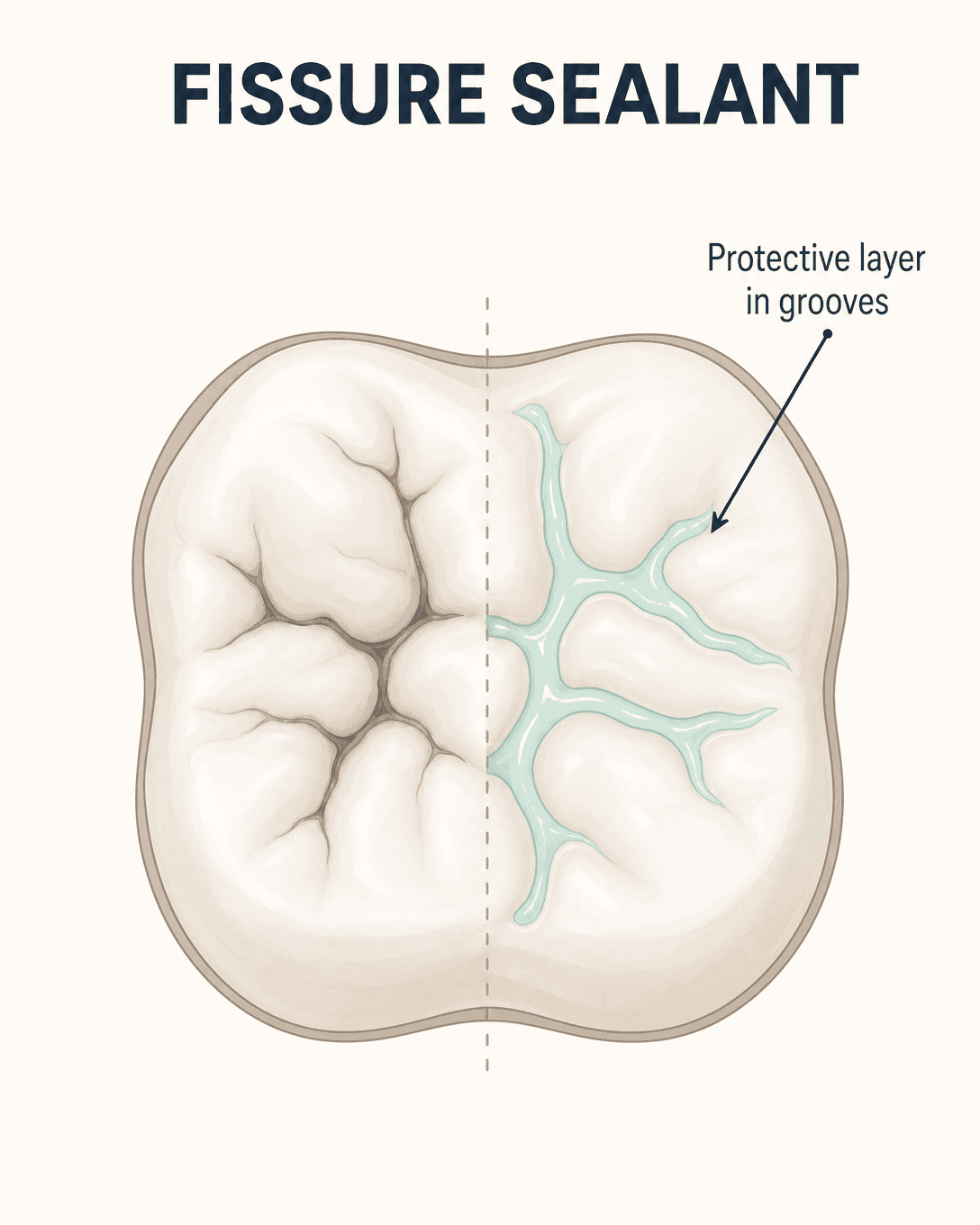
What Are Fissure Sealants?
A fissure sealant is a preventive dental measure. The dentist applies a thin layer of protective resin material into the pits and grooves on the chewing surface of a molar, filling in these hard-to-clean areas to create a smooth barrier. This reduces the build-up of food debris and bacteria and helps lower the risk of decay.
It is important to note that sealants are a preventive measure and cannot treat a cavity that has already formed. If a tooth already has decay, the dentist will address the decay first before considering other preventive steps.
Why Are Children's Molars Especially Prone to Cavities?
The chewing surfaces of the back molars — especially the first permanent molars, which erupt at around six years of age — have naturally deep, narrow grooves that toothbrush bristles often cannot reach. Combined with a young child's still-developing brushing skills and a fondness for sweet foods, these areas easily accumulate plaque.
Childhood cavities are in fact quite common, and there are also many misconceptions about baby-teeth decay. For a fuller picture of prevention and treatment, you may read this guide to childhood cavities, along with this look at common baby-teeth cavity myths.
Which Children May Be Suitable for Sealants?
Fissure sealants mainly suit children whose teeth have deeper grooves and a higher cavity risk, but where the relevant tooth surfaces do not yet have decay. Situations a dentist commonly considers include:
permanent molars that have recently erupted, with deeper chewing-surface grooves
back molars that a child finds hard to clean thoroughly
a higher cavity risk, for example a history of decay or a diet high in sweets
The dentist will also consider the child's age and ability to cooperate. If your child has not yet had a first dental visit, you may first read about when to bring your child for their first dental visit to establish check-up habits early.
What Does the Sealant Process Involve?
Applying fissure sealants is usually quick, involves no drilling, and generally does not cause pain. The process broadly includes:
Cleaning the tooth
The dentist thoroughly cleans the chewing surface of the tooth to be sealed.
Preparing the surface
The surface is appropriately prepared and dried so the sealant can bond.
Applying the sealant
The flowable sealant resin is applied into the grooves, filling the recessed areas.
Light curing
A special curing light is used to set and harden the sealant.
Checking the bite
The dentist checks that the sealant is even and the bite feels comfortable.

Sealants vs Fluoride: What's the Difference?
Fissure sealants and fluoride are both common ways to help prevent cavities in children, but they work differently and can complement each other:
Fissure sealants: mainly a physical barrier that fills the deep grooves on the chewing surface, targeting areas that are hard to clean.
**Fluoride:** mainly helps strengthen tooth enamel and improve its resistance to acid, acting across the whole tooth surface (including smooth surfaces).
The two are not an either-or choice; they can work together. For some cases where early decay has already appeared in a baby tooth, a dentist may also consider options such as silver diamine fluoride (SDF). The most suitable combination should be recommended by a dentist based on the child's situation.
Caring for Teeth After Sealants
After sealants are applied, good daily care is still needed:
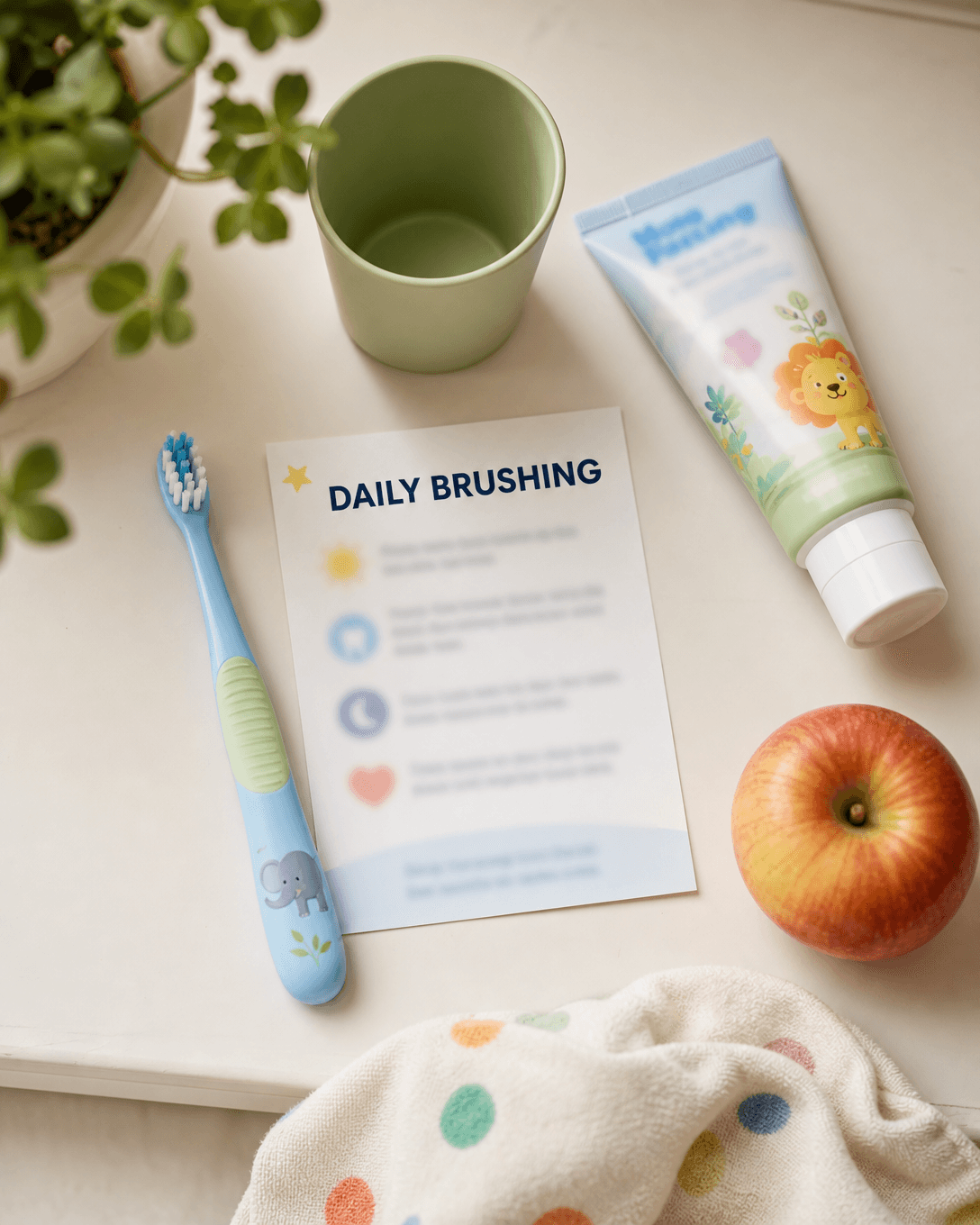
Daily cleaning: Sealants do not replace brushing; children still need to brush daily and use floss.
Regular reviews: Sealants may wear or come off over time, so regular reviews are needed, with reapplication if necessary. Regular dental check-ups help monitor the condition of the sealants.
Regular cleanings: Attend regular teeth cleaning and check-ups to help catch problems early.
Diet habits: Moderating sweets and sugary drinks helps lower cavity risk.
Frequently Asked Questions
Do fissure sealants hurt?
Generally no. Sealants involve no drilling and no anaesthetic; the process is mainly cleaning, applying the sealant, and light curing, and most children cope with it easily.
At what age are sealants suitable?
There is no age that applies to everyone. Dentists often consider sealants soon after the permanent molars erupt, while the grooves are still free of decay. The timing should be judged by a dentist based on tooth eruption.
Does having sealants mean no more cavities?
No. Sealants mainly protect the grooves on the chewing surface, but other parts of the tooth can still develop decay. Brushing, flossing, and regular check-ups are still needed. For a fuller picture of preventing cavities in children, see this guide to childhood cavities.
How long do sealants last?
This varies from child to child and is affected by bite forces, diet, and cleaning. Sealants may wear over time, so regular reviews are needed for a dentist to check whether reapplication is required. Regular dental check-ups help catch sealant wear early.
Do baby teeth need sealants?
It depends on the situation. For some baby molars with deeper grooves and a higher cavity risk, a dentist may recommend sealants. Whether they are needed should be assessed by a dentist.
Final Thoughts
Fissure sealants are a preventive measure aimed at the deep grooves on the chewing surfaces of the molars, and in suitable cases they can help lower a child's risk of cavities. However, they are not suitable for every tooth, and they do not replace daily brushing and regular check-ups. Whether they are appropriate should follow an examination by a dentist.
If you would like to know whether your child is suitable for fissure sealants, or you have noticed deep grooves on their molars that easily trap food, you are welcome to contact our clinic for a consultation to determine whether further assessment or treatment is needed.

Book an Appointment
Schedule your visit now for personalized care in a comfortable environment. Your journey to a brighter, healthier smile begins here.