Silver Diamine Fluoride for Baby Teeth: What Parents Should Know

Children's Dentistry
Prevention & Control
Baby Teeth Cavities
Silver Diamine Fluoride for Baby Teeth: What Parents Should Know
Cavities in baby teeth are common, but they should not be ignored. Some young children may not yet be ready to sit through longer dental treatment, while others may need a way to stabilise tooth decay before further treatment is considered. In suitable cases, silver diamine fluoride (SDF) may be one option to help arrest cavities in baby teeth.
If you would like to understand the broader causes, prevention, and treatment options for children’s tooth decay, you may also read this childhood cavities prevention and treatment guide. SDF is not a cure for tooth decay, and it is not suitable for every child or every cavity. Its role is to help control active decay in selected situations, giving the dentist and parents time to monitor the tooth and plan appropriate follow-up care.
What Is Silver Diamine Fluoride?
Silver diamine fluoride is a dental material that contains silver and fluoride. The silver component helps reduce bacterial activity in the affected area, while fluoride helps strengthen the tooth surface.
In children’s dentistry, SDF is often used as a conservative option to help control tooth decay in baby teeth. It is usually applied as a liquid directly onto the affected tooth surface.
The procedure is generally quick and does not usually involve drilling or local anaesthetic. This can make it easier for some younger or anxious children to tolerate. However, SDF should only be used after a dental assessment to determine whether the tooth is suitable.
How Can SDF Help Arrest Cavities in Baby Teeth?
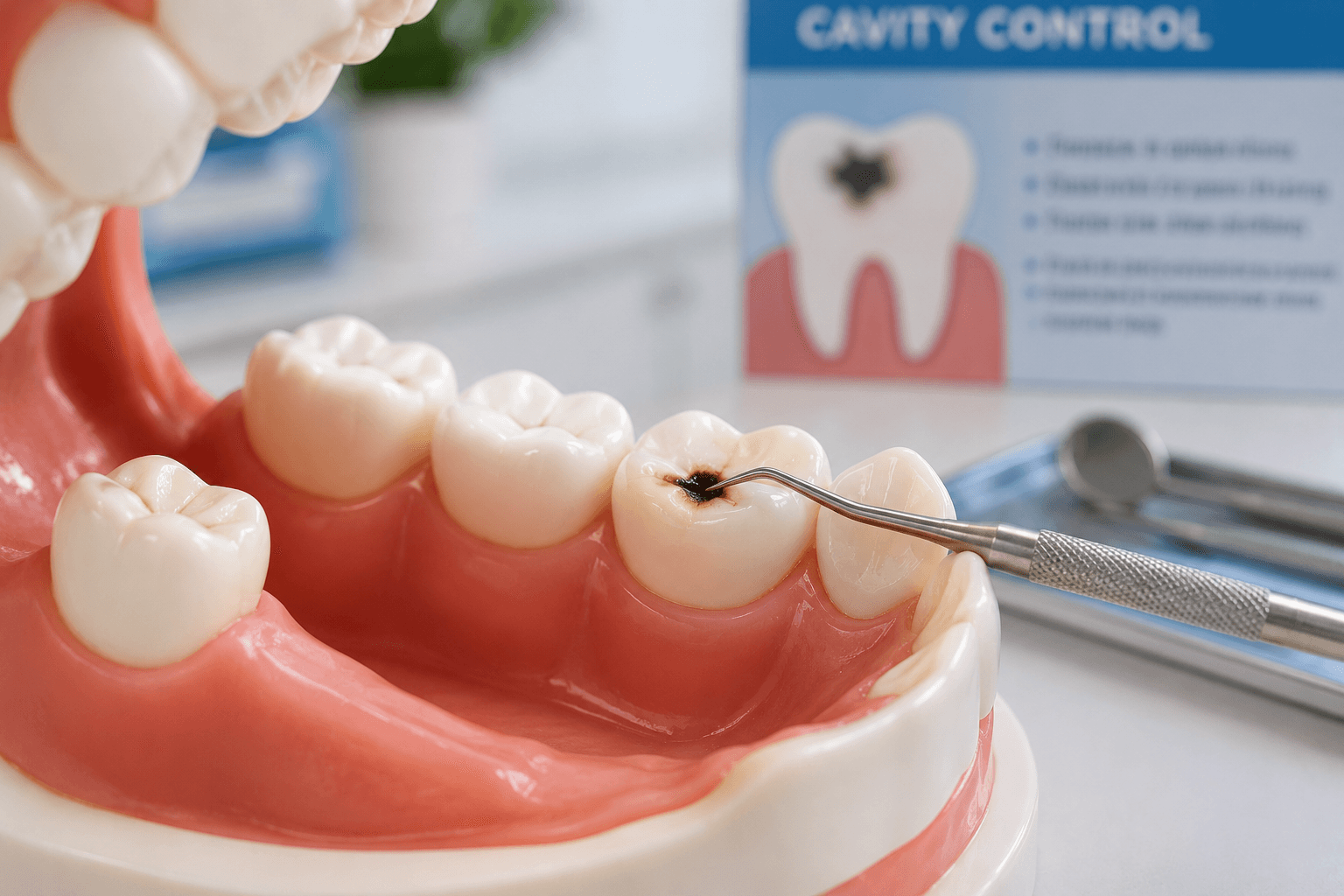
Tooth decay happens when bacteria and acids break down the hard structure of the tooth. If decay continues, it may lead to pain, infection, difficulty eating, or disrupted sleep.
SDF may help arrest or slow down active decay in suitable baby teeth. When applied to the decayed area, it helps stabilise the affected surface and reduce the risk of the cavity progressing further. Parents who are unsure whether baby teeth need treatment may also find this guide on baby teeth cavity myths helpful.
However, SDF does not rebuild the lost tooth structure. If a tooth has a large hole, traps food easily, or affects chewing, a filling, crown, or other treatment may still be needed. Your dentist will advise based on the depth and location of the cavity.
When May SDF Be Suitable for Children?
SDF may be considered when the goal is to control decay and reduce the need for more invasive treatment at that moment. It is especially relevant in some paediatric cases where cooperation is still developing.
SDF may be discussed if:
the child is very young and not ready for longer dental treatment
there are early or moderate cavities in baby teeth
parents want to understand conservative decay control options
several baby teeth are affected and staged treatment is needed
the dentist feels the tooth can be monitored after stabilising the decay
SDF may not be suitable if the tooth is painful, swollen, infected, or if decay is very close to the nerve. In those situations, the dentist may need to discuss other treatment options.
What Happens During SDF Treatment?
SDF treatment is usually straightforward, but it still requires careful professional application. Before treatment, the dentist usually begins with a routine dental check-up to assess the cavity depth, location, and the child’s overall oral health.
A typical process may include:
Dental examination
The dentist checks the cavity, tooth condition, gum health, symptoms, and the child’s ability to cooperate.
Cleaning and drying the tooth
The tooth surface is cleaned, and the area is kept as dry as possible before application.
Applying SDF
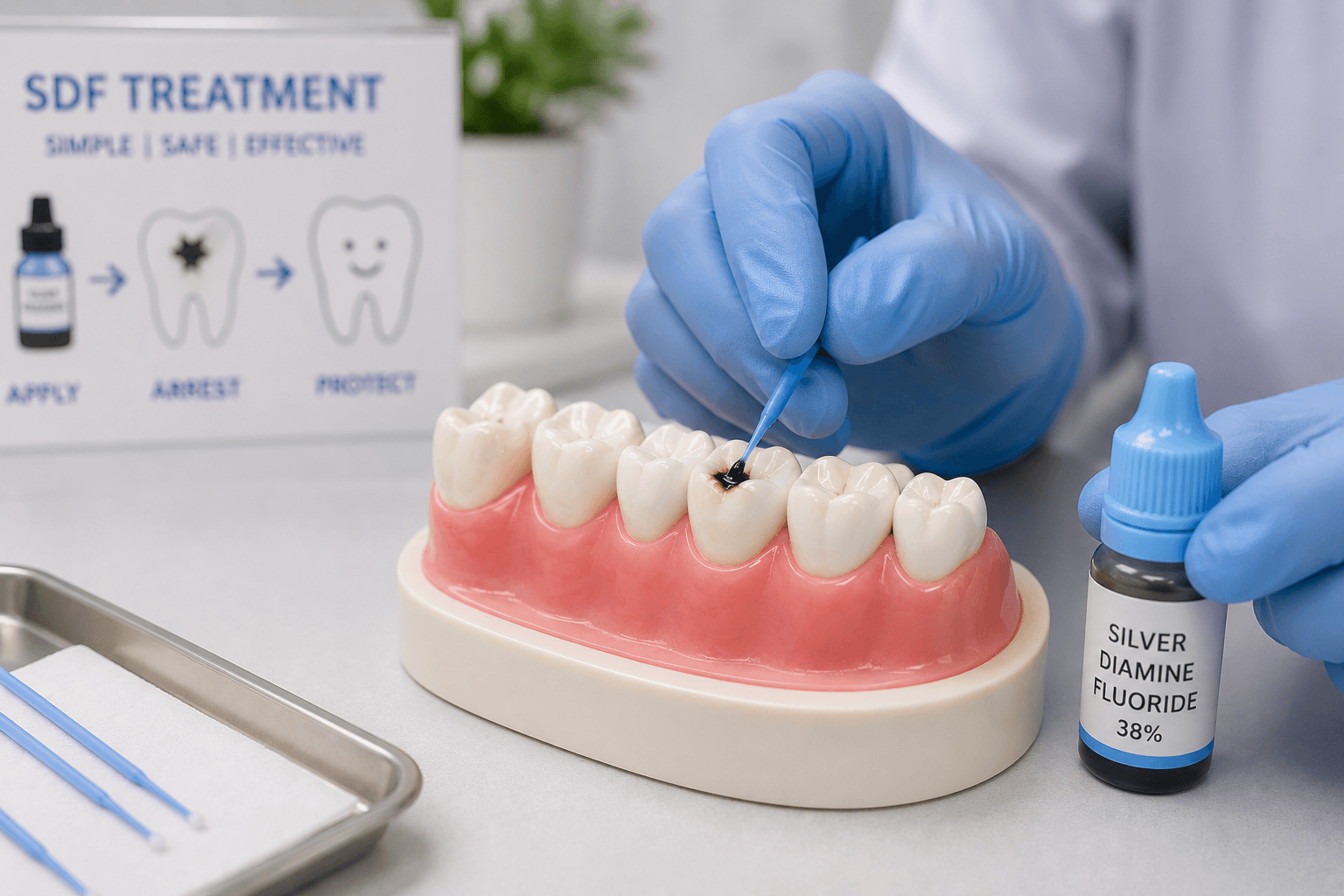
A small amount of SDF is carefully applied to the affected area using a fine brush or applicator.
Monitoring and review
Follow-up appointments are important to check whether the decay has stabilised and whether further treatment is needed.
Benefits and Limitations of SDF
One reason SDF is used in children’s dentistry is that the application is relatively quick and minimally invasive. For some children, this can reduce stress and make dental care more manageable.
Potential benefits include:
short treatment time
usually no drilling
often no local anaesthetic required
may help control decay in suitable baby teeth
useful as part of a staged treatment plan
The main limitation is staining. Areas of active decay treated with SDF usually turn black. This is a common and expected effect, but parents should understand it before treatment begins.
SDF also does not replace all fillings or restorative treatment. If the tooth has lost significant structure, or if there are signs of pain or infection, further treatment may be required.
What Should Parents Do After SDF Treatment?
SDF should be seen as part of a wider oral health plan, not a one-time solution. Daily care at home remains essential. Regular teeth cleaning and dental reviews can also help identify new cavities or gum concerns early.
Parents can help by:
brushing the child’s teeth twice daily
using age-appropriate fluoride toothpaste in the correct amount
reducing frequent sugary snacks and drinks
avoiding prolonged bottle-feeding at bedtime
attending regular dental reviews
watching for pain, swelling, new holes, or changes in eating habits
Baby teeth eventually fall out, but they are important for chewing, speech, jaw development, and guiding adult teeth into position. Caring for them helps support a child’s overall oral health.
Frequently Asked Questions
Can SDF completely cure cavities in baby teeth?
No. SDF can help arrest or slow active decay in suitable cases, but it does not rebuild lost tooth structure. A filling, crown, or other treatment may still be needed depending on the tooth.
Why does the tooth turn black after SDF?
The decayed area usually turns black after SDF is applied. This is a common effect of the material reacting with the decayed tooth structure. Parents should discuss this cosmetic change with the dentist before treatment.
Can SDF be used on front baby teeth?
It may be possible, but the black staining is more visible on front teeth. The dentist will discuss appearance, cavity location, and alternative options before deciding whether SDF is appropriate.
Will my child still need a filling after SDF?
Possibly. SDF may help control decay, but it does not restore the tooth’s original shape. If the tooth has a large cavity or affects chewing, restorative treatment may still be recommended.
How often does SDF need to be applied?
This depends on the child’s dental condition and the dentist’s assessment. Some cases may need repeat application or follow-up treatment. Regular review is important to monitor whether the decay remains stable. If your child has not yet built a dental visit routine, this guide on the first dental visit may help with preparation.
Final Thoughts
Silver diamine fluoride may be a useful option for helping to control cavities in baby teeth, especially for some younger children who are not yet ready for more involved dental treatment. It has benefits, but also clear limitations, including black staining of the treated decay.
If you have noticed any of the situations described above, you are welcome to contact our clinic for a consultation to determine whether further assessment or treatment is needed.

Book an Appointment
Schedule your visit now for personalized care in a comfortable environment. Your journey to a brighter, healthier smile begins here.