Fluoride for Children: A Complete Guide to Cavity Prevention for Parents
Children's Dentistry
Cavity Prevention
Children's Prevention
Fluoride for Children: A Complete Guide to Cavity Prevention for Parents
Many parents have heard that "fluoride helps prevent cavities", but often have questions about how much fluoride toothpaste to use, whether a clinic fluoride application is needed, and whether fluoride is safe. Fluoride is one of the common ways to help prevent cavities in children, and when used appropriately it can help strengthen the teeth and lower the risk of decay
However, every child has a different cavity risk, and the fluoride approach that suits them differs too. A dentist will usually assess a child's cavity risk and their daily diet and cleaning habits during a children's dentistry check-up before recommending a suitable way to use fluoride. Exactly how much, and in what form, should be assessed by a dentist based on your child's individual situation

What Is Fluoride and How Does It Help Prevent Cavities?
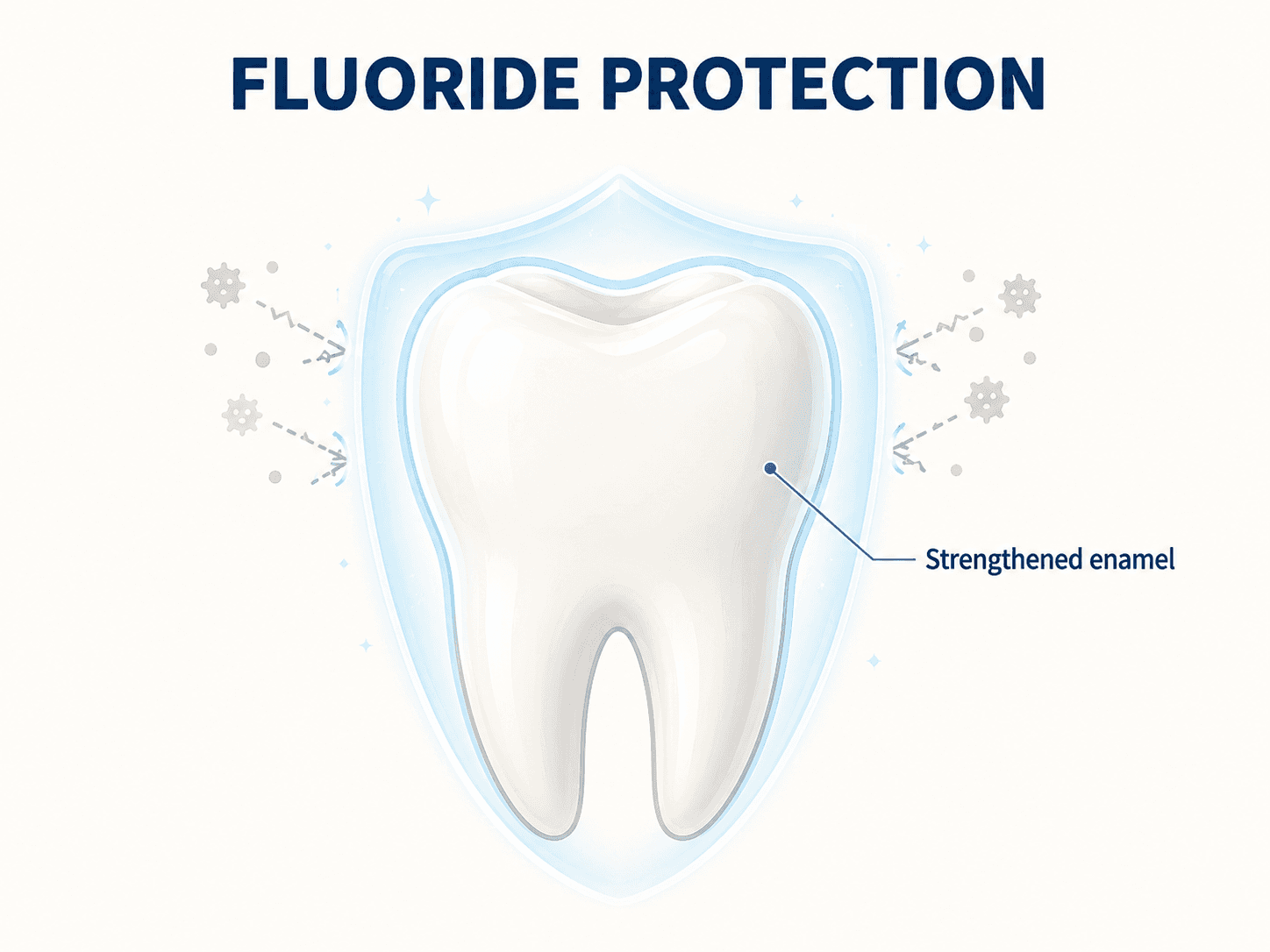
Fluoride is a naturally occurring mineral. In dental prevention, it mainly works in two ways: first, it helps strengthen tooth enamel and improve its resistance to acid; second, it helps early, slightly demineralised tooth surfaces to "remineralise", which can help slow the early progression of decay
Unlike measures that only protect the deep grooves on the chewing surface, fluoride acts across the whole tooth surface, including the smooth surfaces. For this reason, it is often used as one of the foundational measures for preventing cavities in children
What Are the Common Forms of Fluoride?
The common ways children come into contact with fluoride include:
Fluoride toothpaste: used during daily brushing, this is the most common everyday way to help prevent cavities
Professional fluoride application: carried out at the clinic by a dentist or dental professional using a higher concentration of fluoride, aimed at children at higher risk
Other forms: in some situations a dentist may suggest a fluoride mouth rinse, though whether this is suitable for a child depends on age and circumstances
These forms differ in concentration and how they are used. For a fuller picture of preventing and managing children's cavities, you may read this guide to childhood cavities
Do Children Need Professional Fluoride Application?
Whether professional fluoride application is needed mainly depends on a child's cavity risk. For children at higher risk (for example, those with repeated decay, a diet high in sweets, or difficulty cleaning), a dentist may recommend regular fluoride application; for lower-risk children, it may not need to be done frequently
When a child should begin regular check-ups and prevention is also a common question for parents. If your child has not yet had a first dental visit, you may first read about when to bring your child for their first dental visit. Many parents also hold misconceptions about protecting baby teeth, so you may also find this look at common baby-teeth cavity myths helpful
What Does a Professional Fluoride Application Involve?
A professional fluoride application is usually quick and simple, and generally does not cause pain. It broadly includes:
Check-up and cleaning
The dentist first checks the teeth and cleans the tooth surfaces as needed.
Drying the teeth
The tooth surfaces are dried so the fluoride can adhere.
Applying the fluoride
The dentist evenly applies the fluoride gel, foam, or varnish to the teeth.
A short waiting time
Depending on the type of fluoride used, it may need to stay on for a short time to take effect
Aftercare instructions
The dentist provides instructions, such as avoiding eating or rinsing for a short period afterwards
Using Fluoride Toothpaste Safely Every Day
For most children, daily use of fluoride toothpaste is a foundational way to help prevent cavities, but the amount and the way it is used matter:
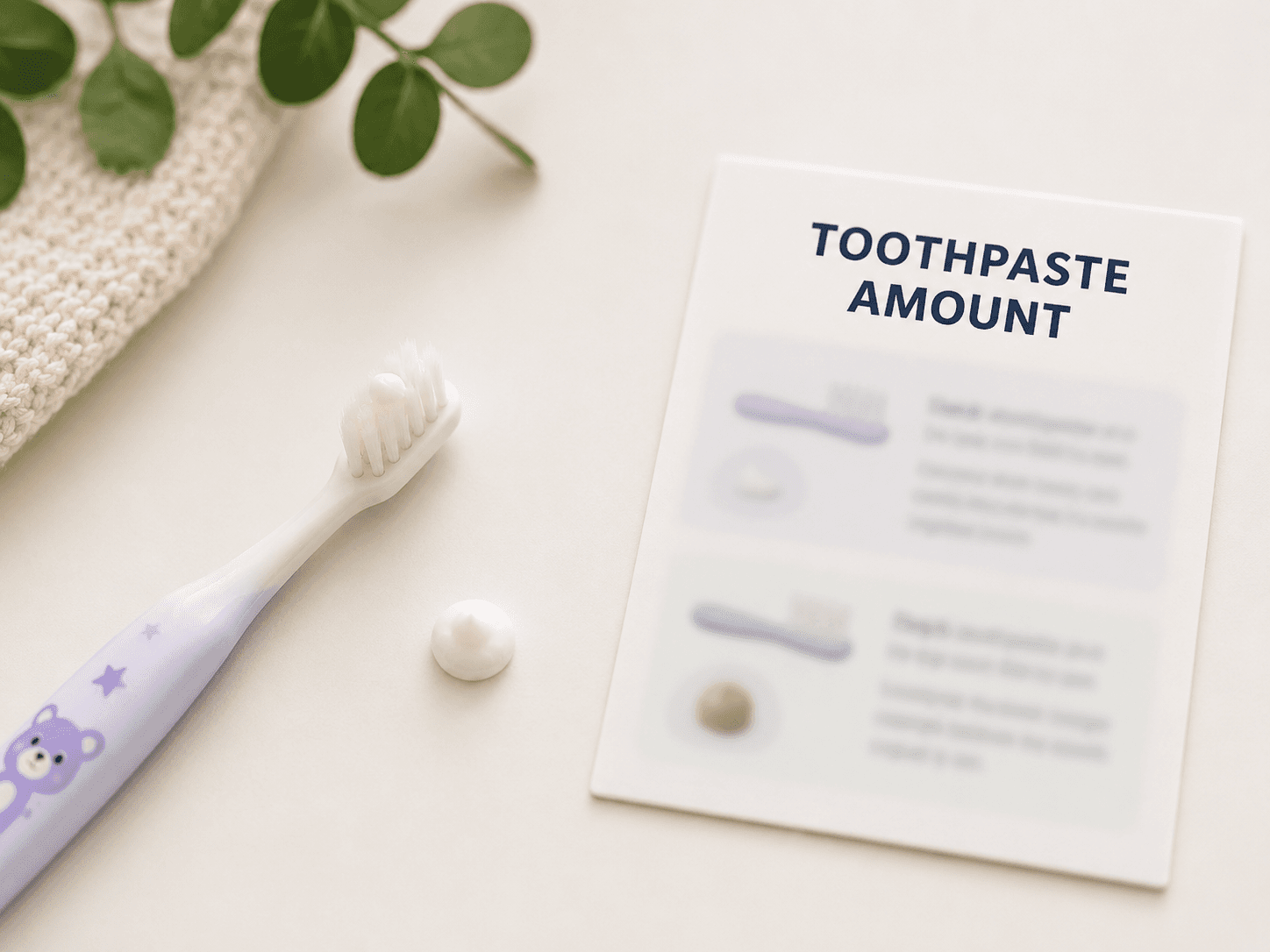
A suitable amount: toddlers and young children need different amounts of toothpaste; a rice-grain to pea-sized amount is generally suggested according to age, and you can check the specifics with your dentist
Parental supervision: for younger children, brushing should be assisted and supervised by a parent
Spit out excess toothpaste: encourage children to spit out excess toothpaste after brushing and avoid swallowing it
Combine with daily cleaning: fluoride toothpaste works best alongside correct brushing and regular teeth cleaning
Things to Note When Using Fluoride
Fluoride helps prevent cavities, but there are still a few points to keep in mind:
The principle of moderation: fluoride works best in appropriate amounts; long-term excessive intake may affect developing teeth, so it should be used under a dentist's guidance
Combining with other preventive measures: for teeth with deeper grooves, a dentist may recommend combining fluoride with fissure sealants, as the two work differently and can complement each other
Early baby-tooth decay: for some cases where early decay has appeared in a baby tooth, a dentist may also consider options such as silver diamine fluoride (SDF)
Regular check-ups: regular routine dental check-ups help the dentist monitor a child's teeth and adjust the prevention plan in good time
Frequently Asked Questions
Is fluoride safe?
In appropriate amounts and with correct use, fluoride is generally regarded as a common way to help prevent cavities. The key is moderation and avoiding young children swallowing excess toothpaste. Using it under a dentist's guidance is recommended
How soon can my child eat after a fluoride application?
This depends on the type of fluoride used, and the dentist will give specific instructions, such as avoiding eating or rinsing for a short period. Please follow your dentist's advice
If we use fluoride toothpaste, is a professional application still needed?
Not necessarily. Daily fluoride toothpaste suits most children; whether an additional professional application is needed depends on the child's cavity risk and should be assessed by a dentist
At what age can a child start using fluoride toothpaste?
The recommended toothpaste amount differs by age. It is best to check with your dentist about the way and amount suitable for your child's age, and to supervise brushing
Should fluoride and fissure sealants be done together?
The two work differently and can complement each other. Fissure sealants mainly fill the deep grooves on the chewing surface, while fluoride strengthens the whole tooth surface. Whether to do both should be recommended by a dentist based on the child's situation
Final Thoughts
Fluoride is one of the common ways to help prevent cavities in children, and in appropriate amounts and with correct use it can help strengthen the teeth and lower the risk of decay. However, the approach to daily fluoride toothpaste and professional application varies from child to child, and it cannot replace a balanced diet and regular check-ups. The most suitable prevention plan should follow an examination by a dentist
If you would like to know whether your child needs a professional fluoride application, or you have questions about using fluoride toothpaste, you are welcome to contact our clinic for a consultation to determine whether further assessment or treatment is needed

Book an Appointment
Schedule your visit now for personalized care in a comfortable environment. Your journey to a brighter, healthier smile begins here.